निकर

This lecture emphasizes the reciprocal relationship between remembrance of God and God’s remembrance of His servant, referencing a sacred tradition. It explains that sincere remembrance in gatherings is witnessed by angels and leads to divine favor. The speaker clarifies permissible levels of worldly love—for spouses, children, and parents—while stressing that ultimate devotion must remain reserved for God. Exceeding these limits constitutes *shirk* (associating partners with God), elevating another being to a level equal to the divine. True love is conditional on God's permission and should not surpass the boundaries set by faith.

66
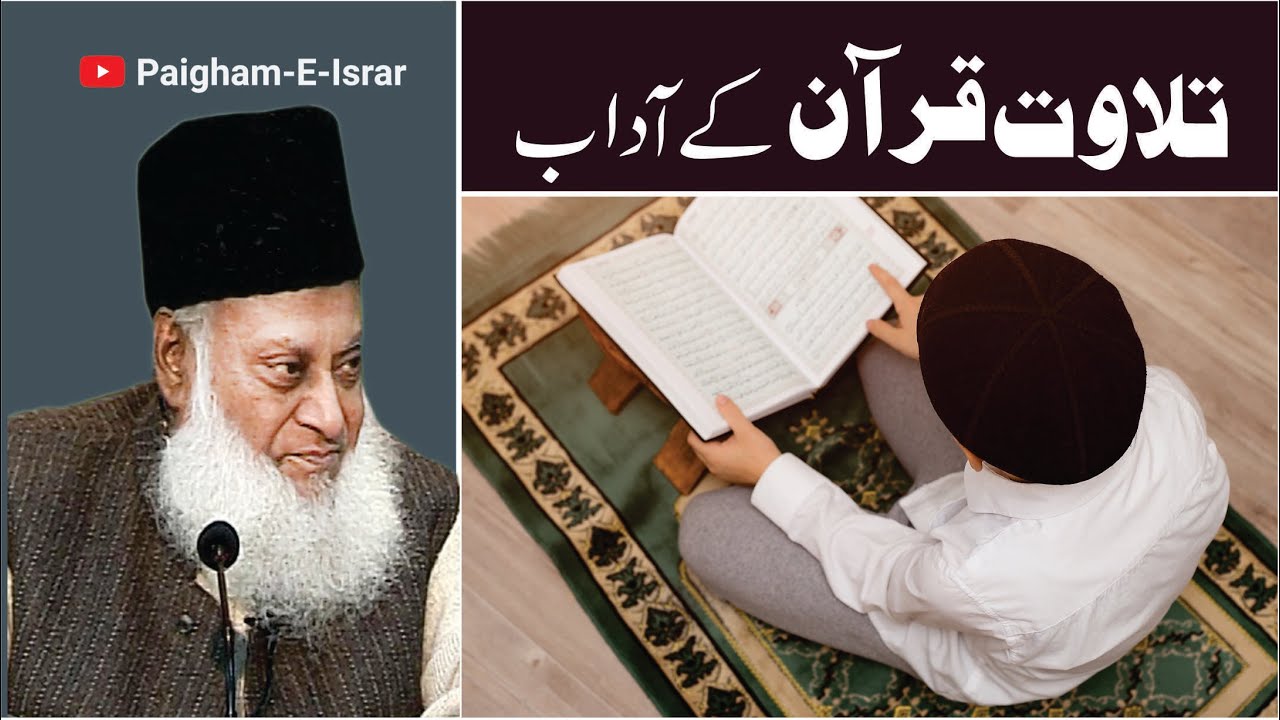
Dr. Israr Ahmad discusses the proper method of Quran recitation, emphasizing the importance of correct pronunciation (tajweed), understanding the meaning, and avoiding superficial artistic displays. He contrasts true Quranic recitation with competitive performances, highlighting that the Quran should enter the heart, not just be a vocal exercise. He warns against reciting Quran while engaging in sinful activities, and stresses that a sincere connection with the Quran strengthens faith and resilience. He also clarifies the difference between *tilawat* (recitation) and *tartil* (rhythmic, meaningful recitation). He cautions against relying solely on eloquent recitation without comprehension, and advocates for learning from qualified teachers to ensure accurate pronunciation and understanding.
119
This lecture discusses the extension of the principles of Hajj beyond the physical pilgrimage. It explains how the reverence associated with specific locations in Hajj, and the importance of sacrifice within the Hajj rituals, are mirrored in the universal practice of offering sacrifice. The speaker highlights how participation in sacrifice, even when unable to physically perform Hajj, allows Muslims worldwide to share in a core tenet of the pilgrimage. Similarities between the restrictions observed during Ihram and the spirit of sacrifice are drawn, emphasizing the broader application of Hajj’s principles to the entire Muslim community.
53

The history of Islam and Muslims reveals a pattern of rise and decline. Initially unified, Islam flourished during the Rashidun Caliphate. Post-Caliphate, while Islam experienced decline, Muslim power continued to ascend, reaching its peak. Subsequently, Muslims also faced decline, followed by a resurgence. The Tartars, despite inflicting immense casualties on Muslims, ultimately converted to Islam and became its champions. Successive Turkic dynasties—Timurids in India, Safavids in Iran, Seljuks in the Middle East, and Ottomans—led Islamic power for centuries. The Ottoman Caliphate held prominence for four hundred years, before ultimately declining after World War I.
53
This lecture elucidates the dynamic and revolutionary nature of faith, emphasizing that the true essence of belief lies in striving for the elevation of God's religion. Prayer, fasting, pilgrimage, and charity are not merely rituals, but tools to cultivate the patience, steadfastness, and resilience necessary for this struggle. Without a clear purpose – the advancement of faith – these practices risk becoming empty formalities. A life dedicated to the glory of faith imbues these acts with genuine meaning and purpose, transforming the believer into a dedicated servant.
56
This poem reflects on the cyclical nature of struggle and disappointment in pursuing a revolutionary purpose. It acknowledges the inevitability of setbacks and the potential for repeated failure, emphasizing the need for unwavering preparation and resilience. The speaker accepts that effort, even if ultimately unsuccessful, is a necessary part of striving for change. It stresses the importance of continuous preparation for future endeavors, even in the face of repeated defeats, and cautions against losing resolve or abandoning the pursuit of a greater goal. The poem speaks to the persistent hope for a better future despite the constant threat of ruin, and the need to nurture the seeds of change even in barren soil.
48
