Shorts

Dr. Israr Ahmad explains that a prayer is not accepted if the individual’s sustenance, clothing, and even physical being are derived from unlawful sources. He emphasizes that prayers offered while burdened with sin and sustained by illicit means will not reach God. The lecture details how a person’s entire existence must be purified and aligned with righteousness for their supplications to be answered. The speaker highlights the importance of earning lawful livelihood and abstaining from unlawful sources to ensure the acceptance of prayers.

60

This lecture details the Islamic guidelines for Muslim women’s clothing. It emphasizes loose-fitting garments that do not reveal the body’s contours, ensuring modesty and preventing undue attention. The discussion covers the importance of covering the head and neck, and maintaining a humble demeanor to safeguard against unwanted gazes, even from male family members. The goal is to uphold Islamic values of modesty and respect.
122
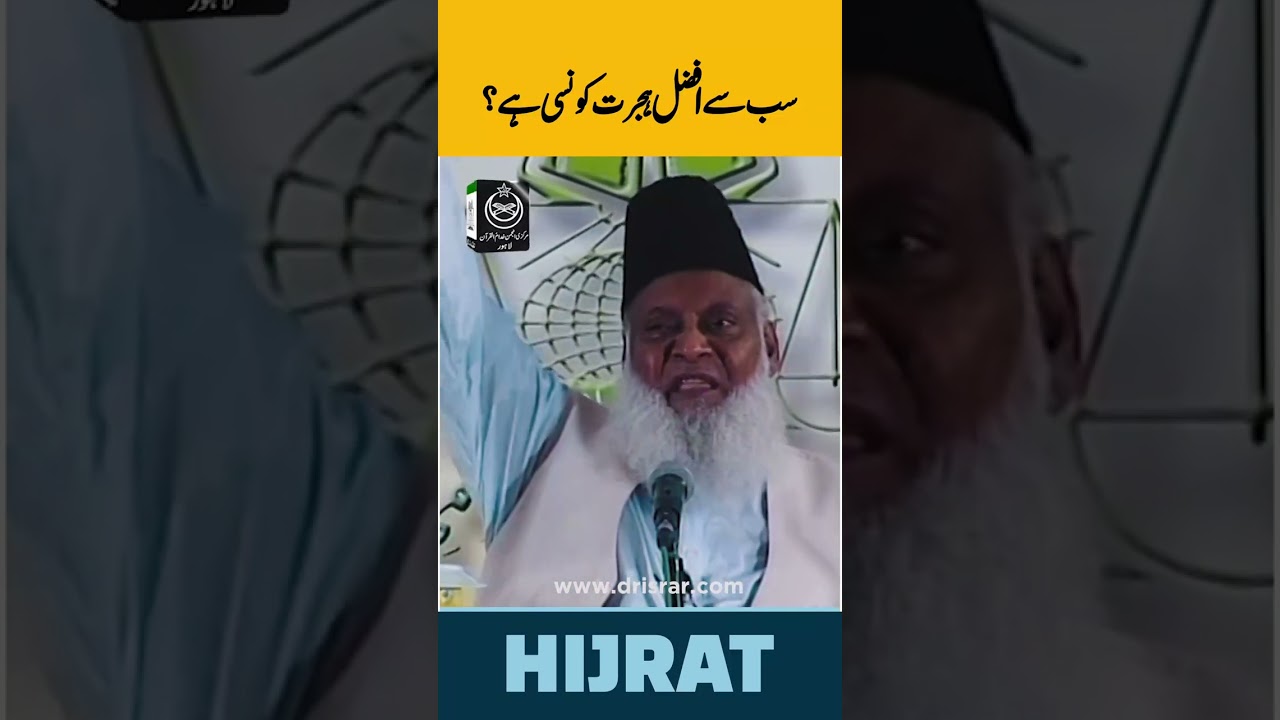
The lecture defines migration (Hajrat) not merely as physical relocation, but as abandoning anything displeasing to God. It outlines three levels: renouncing interest-based transactions, establishing modesty and privacy within the home, and ultimately, sacrificing all worldly possessions – even family – to uphold and defend the faith when facing persecution and conflict. This final level represents the highest form of migration, undertaken when actively striving to establish God’s law.
65

This lecture details three elements that lead to salvation and three that lead to destruction. Salvation is achieved through fear of God in both private and public, speaking the truth regardless of anger or pleasure, and fulfilling one’s obligations. Destruction stems from following one's desires, excessive love of wealth, and self-admiration. The most destructive of these is a bloated ego and considering oneself superior.
50

This lecture explains that the essence of all divine commands converges on the single concept of *ibadat* (worship). The speaker references the initial verses of Surah Nuh, where Prophet Noah is instructed to warn his people. The core message is to worship God, practice *taqwa* (righteousness), and obey the prophet. This highlights worship as the fundamental purpose of human existence and the means to avert divine punishment. The lecture emphasizes that true worship encompasses both adherence to divine commands and a sincere devotion to God.
64

This lecture explores the concept of choosing a difficult, less-traveled path in life as opposed to a broad, popular one. It emphasizes that while the narrow path may be challenging, it ultimately leads to spaciousness and fulfillment. The speaker warns against following the majority who often lead to hardship and emphasizes the importance of choosing a path aligned with spiritual growth and lasting peace. It highlights that true progress lies in embracing difficulty and choosing the less-conventional route.
56
