Corti

Dr. Israr Ahmad explains that a prayer is not accepted if the individual’s sustenance, clothing, and even physical being are derived from unlawful sources. He emphasizes that prayers offered while burdened with sin and sustained by illicit means will not reach God. The lecture details how a person’s entire existence must be purified and aligned with righteousness for their supplications to be answered. The speaker highlights the importance of earning lawful livelihood and abstaining from unlawful sources to ensure the acceptance of prayers.

60
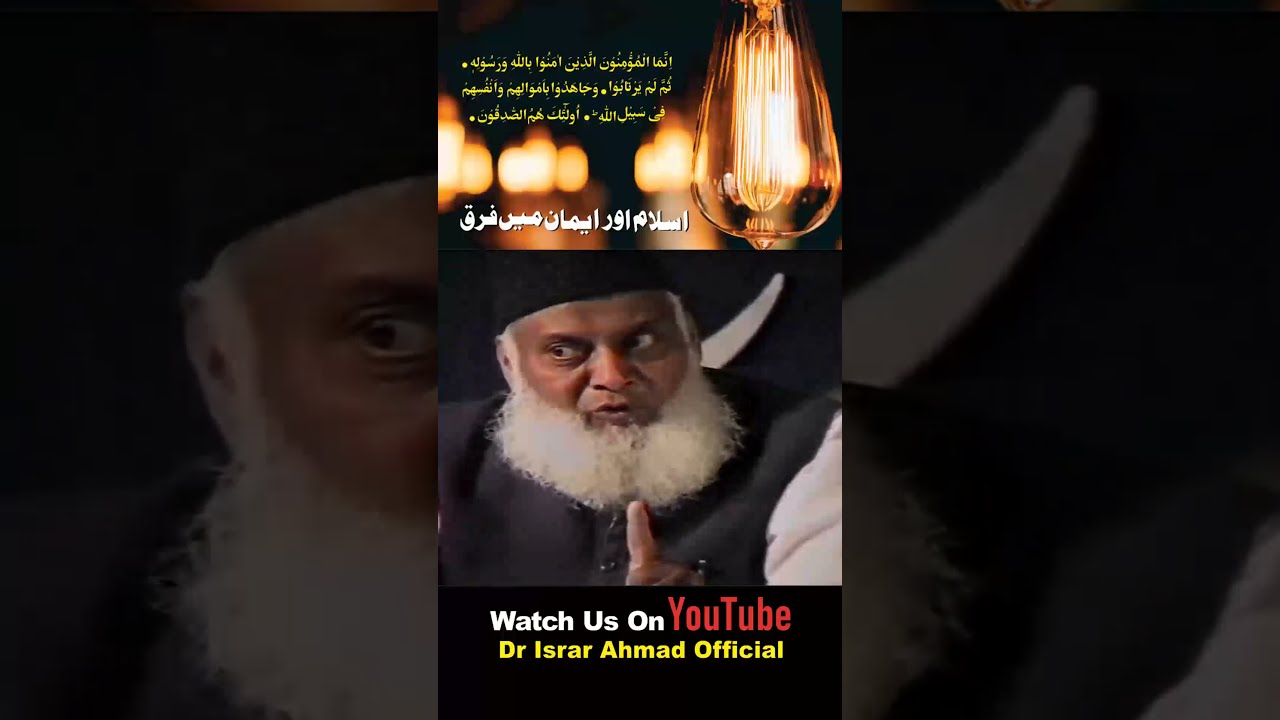
This lecture explores the distinction between Islam and Iman (faith). The speaker clarifies that simply professing Islam is insufficient; true faith requires the internalization of belief within the heart. The Quranic verse from Surah Al-Hujurat, chapter 49, verse 14, highlights the difference between outward submission and genuine belief. The speaker elaborates on the verse in Surah Al-Saf, chapter 6, verse 10, which emphasizes the need for a faith free from doubt and supported by striving in the path of Allah with wealth and life. The lecture emphasizes that a complete faith is demonstrated through both belief and action, and that true believers continuously strive to deepen their connection with Allah.
113

The Quran refers to Allah as 'Mawla'. Some people address respected scholars as 'Maulana' as a sign of reverence. This lecture clarifies that using the term 'Maulana' is not shirk (associating partners with God). The word 'Mawla' has multiple meanings: master, helper, and even a freed slave. It’s a term of respect, similar to addressing someone as 'my master', and its use is permissible. Both 'Maulana' (plural) and 'Maulvi' (singular) convey the same meaning: ‘our master.’ Showing respect to others is not an act of shirk.
67

This lecture explores the multifaceted greatness of Prophet Muhammad (peace be upon him). It distinguishes between his status as a prophet and his humanity, noting that understanding the full extent of his greatness is beyond human comprehension. The lecture emphasizes that only a prophet can truly appreciate the stature of another prophet, highlighting the unique qualities inherent in Prophethood. It explains that assessing the Prophet's significance requires a perspective beyond that of a mere physician or scholar, acknowledging his exceptional position in both spiritual and worldly affairs.
55

This lecture explores the concept of attributing both good and evil to Allah, emphasizing the importance of acknowledging mistakes and seeking forgiveness. It clarifies that while humans are prone to error, attributing good deeds to divine guidance and accepting responsibility for misdeeds is crucial. The speaker highlights the necessity of repentance (tawbah) and understanding that true guidance comes from Allah alone. The discussion also touches upon the temptation and subsequent justification of wrongdoing, illustrating the deceptive nature of Shaytan and the importance of self-accountability. Ultimately, the lecture emphasizes that sincere repentance and reliance on Allah’s mercy are essential for spiritual growth.
59

This lecture addresses the proper way to assist individuals trapped in debt or facing business failure. It emphasizes empowering them to regain financial independence, rather than providing perpetual financial support which perpetuates their dependency. The speaker advocates for strategic assistance that enables individuals to rebuild their lives and become self-sufficient members of the community, particularly within minority groups. The focus is on enabling sustainable recovery, not simply maintaining a state of need.
47
