শর্টস
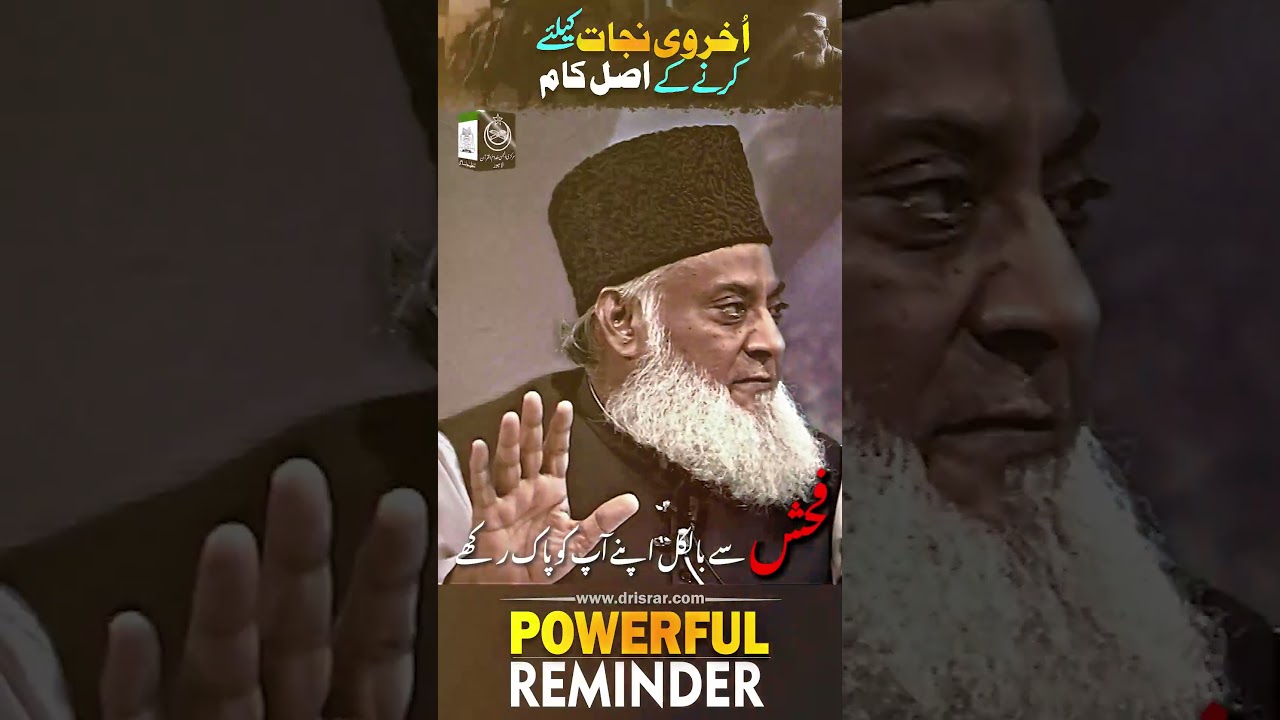
This lecture emphasizes prioritizing the afterlife while fulfilling worldly needs. It stresses reliance solely on Allah, avoidance of major sins, controlling anger, establishing a heart connection with Allah through prayer, seeking counsel, and dedicating wealth to the cause of Allah. The speaker advocates a balanced life focused on spiritual preparation and righteous action.

65

This lecture discusses the grave sin of submitting to any authority other than God. It equates failing to establish a caliphate—a system promised by God—with disbelief, ingratitude, and rebellion. The speaker argues that Muslims must actively strive to fulfill this divine promise, or risk spiritual ruin. The lecture draws a parallel between this failure and the disobedience of Iblis, highlighting the seriousness of rejecting God's ordained system of governance. It serves as a warning against complacency and a call to action for the Muslim community.
61

This lecture explores the Prophet Muhammad’s (peace be upon him) acknowledgement of uncertainty regarding the timing of divine victory. The Quranic verses cited reveal that even the Prophet did not know whether the promised events were imminent or distant. This highlights a crucial understanding: knowledge of the unseen rests solely with God. The lecture emphasizes that such knowledge is not granted to even the most revered messengers, and that uncertainty about the future is a natural human condition. The verses also suggest that trials and tribulations may be part of the divine plan, serving as both tests and opportunities for growth. The core message is acceptance of divine will and a focus on present action rather than speculation about the future.
42

Human life is defined by struggle and hardship, as ordained by creation. Individuals face varying degrees of mental and physical exertion, with disparities in access to basic necessities like food. This often leads to health issues and anxieties about the future. The cycle of life, bound by limitations and sorrow, prompts the question of finding liberation from suffering before death. This universal human condition highlights the inherent challenges and search for meaning within existence.
61

The core message of the Quran centers on the singular worship of Allah. This lecture explains that the foundational principle of the Quranic invitation is devotion to Allah alone, rejecting all other forms of worship. The Quran emphasizes establishing worship of the Creator, as highlighted in Surah Hud’s opening verses, which describe the Quran as a firmly established book with detailed revelations from the All-Knowing, Wise Creator. The Quranic command, 'Do not worship anyone besides Allah,' reinforces this central theme, making the exclusive worship of Allah the essence of the Quranic message. This singular devotion is the key takeaway of the entire scripture.
88

The speaker discusses the decline of spiritual understanding within Islamic practice. While rituals like prayer, fasting, sacrifice, and pilgrimage remain prevalent, the underlying philosophical depth and transformative effect have diminished. The speaker argues that the sheer number of people performing these rituals – millions undertaking the Hajj – does not translate into societal impact or personal change. The focus has shifted from inner transformation to mere external observance, resulting in a disconnect between practice and genuine spiritual growth.
72
