Kratke hlače
This lecture defines *Ankar-e-Munkarat* as opposition to systems of governance not based on divine law. It emphasizes that true commitment to faith requires active resistance – through action, speech, and internal conviction. The speaker argues that a collective, disciplined group is essential for meaningful change, something currently lacking in our approach to establishing divine law. The focus is often limited to personal piety or merely spreading the message, instead of striving for systemic transformation. Efforts should extend beyond individual good deeds and encompass a broader commitment to establishing justice and reforming societal structures.

72
Those close to God experience no fear or grief. Fear stems from what God wills, and even seemingly undesirable events contain hidden benefits. The Quran highlights that what we dislike may be good, and what we desire may be harmful, as God’s knowledge surpasses our own. We perceive only the outward appearance of actions and events, unaware of the divine intention and wisdom behind them. Our vision is limited; we cannot comprehend the ultimate purpose of God. Therefore, we are easily affected by superficial occurrences. True understanding lies in recognizing God’s overarching plan, which remains beyond our immediate perception.
53
Dr. Israr Ahmad discusses the Prophet Muhammad’s (peace be upon him) remarkable humility and integration with his companions. He emphasizes the Prophet’s deliberate choice to present himself as an ordinary human being, eschewing any display of special status or privilege. The Prophet actively discouraged people from standing upon his arrival and mingled freely with his followers, sitting among them without distinction. This demonstrated a profound commitment to equality and accessibility, fostering a sense of unity and brotherhood among the early Muslim community. The speaker highlights that the Prophet’s approach was a conscious effort to remove barriers between himself and his companions, encouraging genuine connection and spiritual growth.
45
True servants of God walk with humility on Earth. This entails a gentle gait, lowered gaze, and a modest demeanor. They avoid arrogance, forceful strides, and any display of pride. Their movement is characterized by grace, composure, and a mindful awareness of their position before God. This manner of walking reflects inner piety and a recognition of God’s blessings.
64
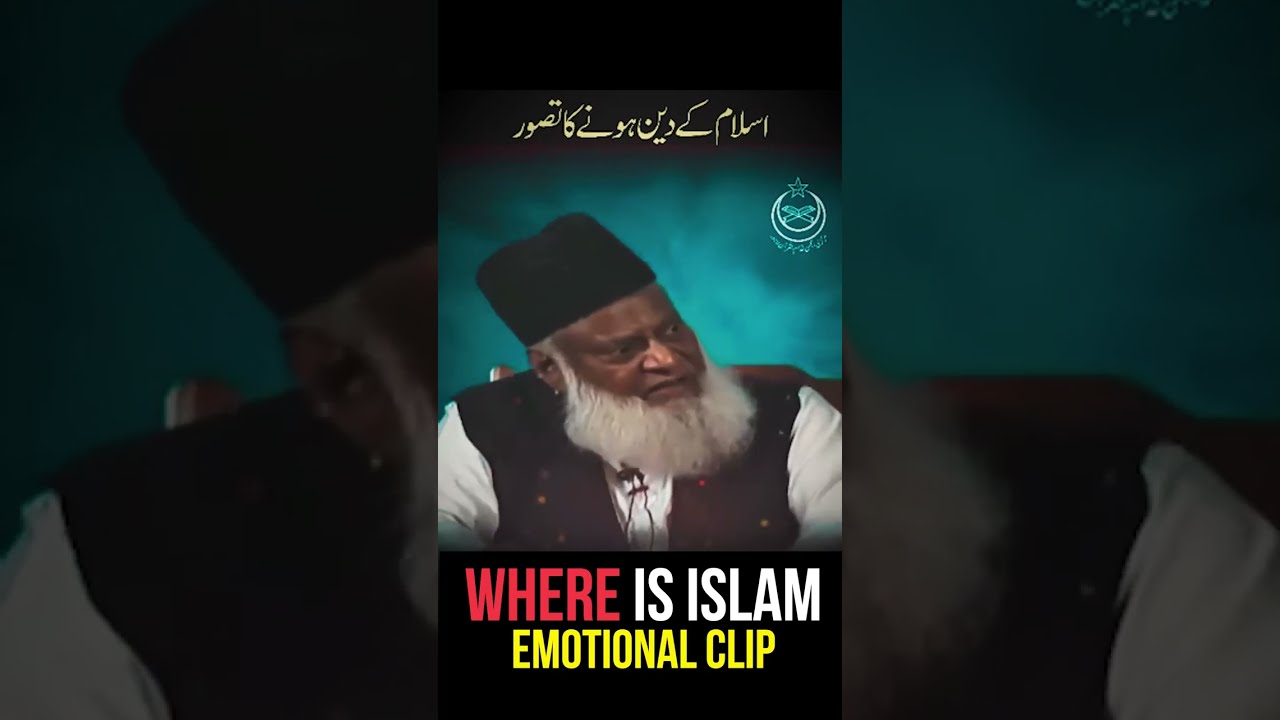
Dr. Israr Ahmad discusses the perceived freedoms within a society that fundamentally contradicts Islamic principles. He argues that true freedom, as defined by Islam, is absent when societal structures are built upon interest-based systems and disregard Islamic law. The lecture highlights a disconnect between ritualistic religious observance – worship, beliefs, ceremonies like births, weddings, and funerals – and the implementation of Islam as a comprehensive way of life. He asserts that even those hostile to Islam offer freedoms that are denied to Muslims due to the absence of an Islamic system. The core argument is that Islam, as a complete code of conduct, has been relegated to mere ritual in the minds of the vast majority of the populace.
74

This lecture emphasizes the importance of inviting people to the path of God with wisdom, good counsel, and respectful debate. It highlights that delivering the message of God is a duty, best fulfilled through gentle persuasion and eloquent communication. The speaker stresses that even in disagreement, one must maintain a dignified and courteous approach.
43
