Celana pendek
This lecture defines *Ankar-e-Munkarat* as opposition to systems of governance not based on divine law. It emphasizes that true commitment to faith requires active resistance – through action, speech, and internal conviction. The speaker argues that a collective, disciplined group is essential for meaningful change, something currently lacking in our approach to establishing divine law. The focus is often limited to personal piety or merely spreading the message, instead of striving for systemic transformation. Efforts should extend beyond individual good deeds and encompass a broader commitment to establishing justice and reforming societal structures.

72
The soul is distinct from the body. While death seizes the body, returning it to the earth from whence it came, the soul does not experience death itself. It is a transfer, originating from God and returning to Him. The soul temporarily inhabits the body during earthly life, then either resides in 'Aliyeen' or 'Sijjeen' – realms of varying states – awaiting eventual return to its divine source. The body is subject to earthly cycles of creation and dissolution, but the soul is eternal and its destiny lies with God.
51
This lecture explores the speaker’s reflections on his life’s purpose and original objectives. He emphasizes a shift from viewing faith as merely a tool to embracing it as the ultimate goal. The speaker laments the fragmentation of the Muslim community and expresses a desire to rebuild unity, guiding people towards the destination set by God and the Prophet Muhammad. He highlights a longing to restore a cohesive community focused on divine guidance and shared purpose.
44
This lecture clarifies that true support and reliance should only be placed in Allah. The world is full of false hopes and dependencies. People often seek help from others, believing they will provide assistance, but these relationships are ultimately fragile and unreliable, like spiderwebs. True strength comes from a connection with Allah alone. Seeking support from anyone or anything other than Allah is a mistake, as only He is the ultimate protector and provider. This concept emphasizes the importance of tawakkul (trust in Allah) and the transient nature of worldly relationships.
54
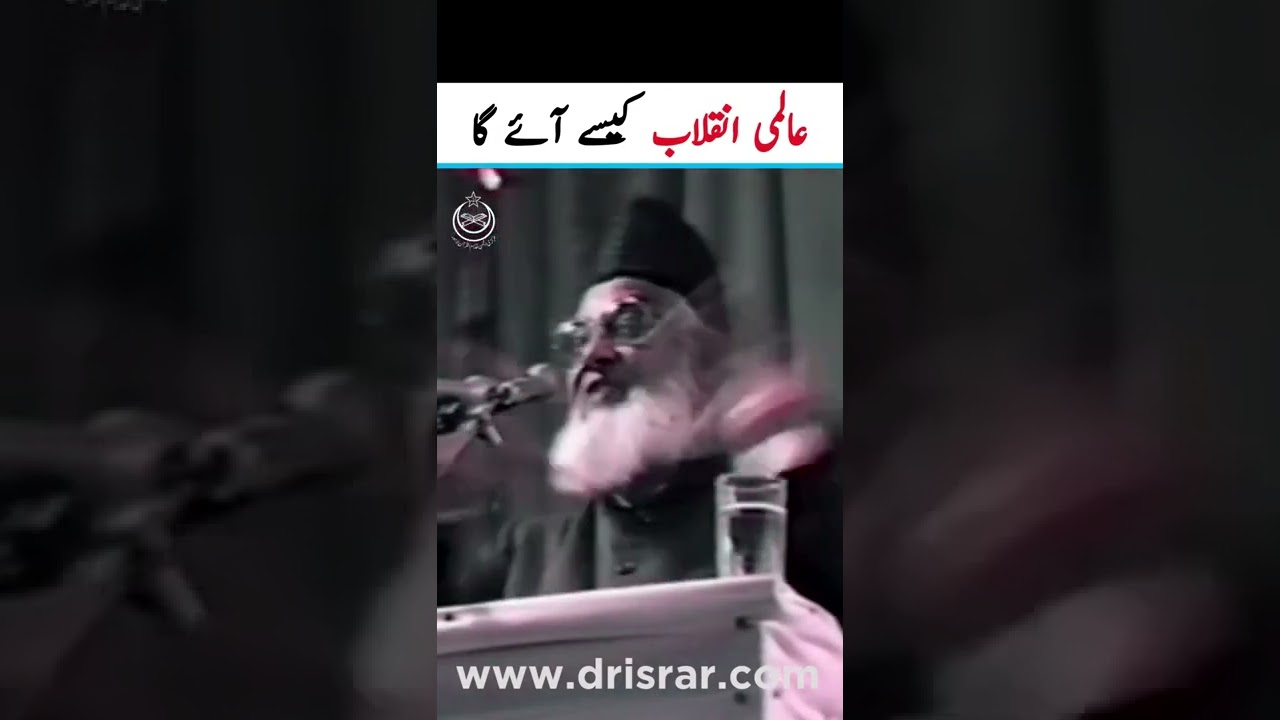
This lecture explores the concept of inner revolution as the true catalyst for lasting societal change. Dr. Israr Ahmad argues that external revolutions are temporary if not rooted in a fundamental transformation of individual character. He draws parallels to the revolution initiated by the Prophet Muhammad, highlighting the internal transformation within the Sahaba (companions) as the driving force behind its rapid expansion and unprecedented success. The lecture emphasizes the immense potential of this internal revolution to reshape the world, referencing a vision of its potential reach across vast geographical areas. The speaker contrasts this with the failed attempt at internal revolution, and resulting discord, by Abdullah ibn Saba, and the slowing of Muhammad’s revolution. The lecture posits that genuine and lasting change originates from within the individual, ultimately manifesting as a global phenomenon.
72
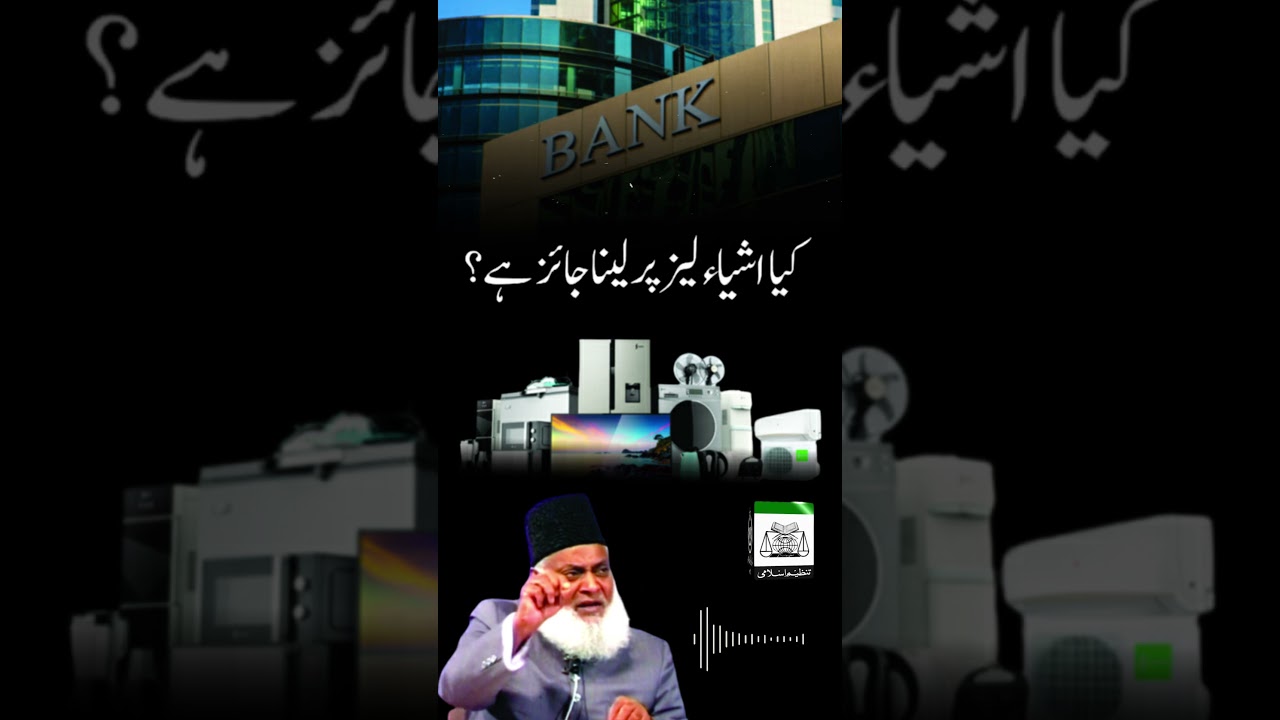
The speaker clarifies the distinction between legitimate leasing (ijara) and purchases financed through interest (riba). Leasing involves renting an asset for a specified period, with the renter paying a monthly fee and covering operational costs. In contrast, an interest-based purchase involves financing the full price of an asset over time, accruing interest on the outstanding amount. The speaker emphasizes that financing a purchase with interest, even if labeled differently, constitutes riba and is prohibited. Legitimate leasing does not involve any form of interest or profit on the asset itself, only a rental fee for its use. The discussion highlights that changing the label of an interest-based transaction does not alter its fundamentally prohibited nature.
65
