Celana pendek
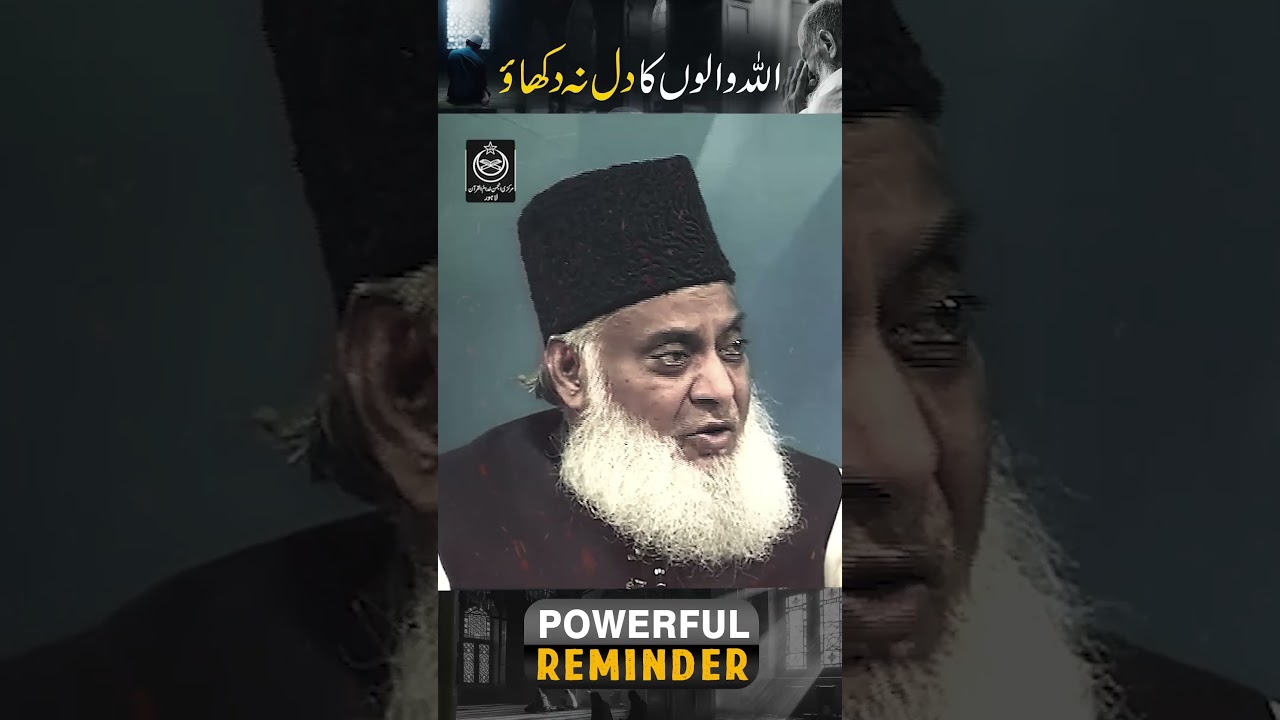
This lecture elucidates the severe consequences of animosity towards a pious individual, or *Wali Allah*. It emphasizes that hostility towards a friend of God is equivalent to declaring war against God Himself. The discussion highlights that true spiritual pain arises from causing hurt to those with sensitive hearts, and that hurting a *Wali Allah* brings shame and disgrace upon an entire community. The lecture stresses that genuine love for God is reflected in compassion and care for His devoted servants, and that inflicting pain on them invites divine retribution. The core message is that harming those close to God brings about spiritual and communal ruin.

49

The advent of Muhammad ﷺ brought a complete transformation to all aspects of life. Existing beliefs, ideologies, individual personalities, and moral codes were fundamentally altered. Daily routines, social structures, political systems, and societal norms underwent a radical change. A nation previously characterized by widespread illiteracy became a beacon of knowledge and learning, becoming an educator for the world. It absorbed and developed sciences from both the East and West, disseminating them globally. This profound revolution dwarfs any other historical upheaval, including the French Revolution, in its scope and impact.
45

The Quran’s resounding verses jolted people from their slumber and roused those lost in worldly pleasures. The verses of Surah Al-Asr emphasize humanity’s inherent loss and the impending accountability. The approaching Day of Judgement finds people heedless and turning away. These powerful pronouncements caused widespread upheaval and a sense of urgency throughout Arabia, compelling a reckoning with spiritual realities.
39

The speaker discusses the decline of spiritual understanding within Islamic practice. While rituals like prayer, fasting, sacrifice, and pilgrimage remain prevalent, the underlying philosophical depth and transformative effect have diminished. The speaker argues that the sheer number of people performing these rituals – millions undertaking the Hajj – does not translate into societal impact or personal change. The focus has shifted from inner transformation to mere external observance, resulting in a disconnect between practice and genuine spiritual growth.
66

This lecture details the practice of Itikaf, observed during the last ten days of Ramadan. It begins on the twenty-first night, immediately after the twentieth night concludes, and continues until the new moon of Shawwal is sighted, marking the end of Ramadan and the beginning of Eid. The discussion focuses on the proper method and significance of this devotional retreat.
162

True faith is demonstrated through actions motivated solely by devotion to God. Loving for God's sake and hating for God's sake are fundamental aspects of complete faith. Giving and withholding should also be done solely to please God, adhering to divine command. A believer’s love and animosity stem from adherence to or rejection of God’s principles, not personal desires. Fulfilling these four conditions – loving for God, hating for God, giving for God, and withholding for God – completes one’s faith.
53
