Quần short
This lecture elucidates the inherent truth and ultimate triumph of Islam as a complete way of life. It asserts that God sent His Messenger with guidance and truth to establish a just order, ensuring the dominance of divine law over all other systems. The core message emphasizes that the divine system will prevail, overcoming injustice and establishing a righteous world. The lecture highlights the inevitability of God’s plan for the supremacy of truth and justice, ultimately leading to a world governed by divine principles.

60

This narrative recounts the brutal torture inflicted upon Hazrat Samia and Hazrat Yasir, early converts to Islam, by Abu Jahl. Despite relentless physical abuse, including being tied to pillars and subjected to intense pain, they refused to renounce their faith. Abu Jahl offered to spare Hazrat Samia's life if she acknowledged the divinity of an idol, but she spat at it, intensifying his wrath. The account highlights their unwavering commitment to Islam in the face of extreme adversity and the prophetic announcement of their eventual reward in paradise, delivered by the Prophet Muhammad (peace be upon him).
57
This lecture explains that Allah hears and responds to every sincere call and prayer, regardless of location or circumstance. It clarifies that proximity to sacred places like the Haram or Arafat doesn't create a greater connection with Allah; He is always near. The speaker refutes the notion that one cannot directly communicate with Allah, emphasizing that such beliefs stem from polytheistic ideologies. Allah is ever-present and accessible to those who turn to Him sincerely. The lecture stresses that Allah is not distant but close to those who call upon Him and that true connection comes through sincerity, not location.
66
The essence of worship lies in the interplay between love and obedience. Obedience represents the visible form of worship, while love is its underlying spirit. True worship stems from a genuine affection for the Divine, transforming acts of obedience into meaningful devotion. Without love, obedience becomes a mere formality, potentially driven by compulsion, pretense, or self-interest. The body exists because of the soul; similarly, worship exists through the spirit of love. Love animates obedience, giving it life and sincerity. Without this animating force, obedience remains an empty shell.
54
This lecture emphasizes the significance of fulfilling commitments within societal and Islamic frameworks. Agreements, whether formal contracts like employment or social contracts like marriage, establish mutual obligations and trust. The speaker highlights that upholding one's promise is a fundamental aspect of faith, as individuals will be held accountable by God for their commitments. Every agreement is witnessed by God, and failure to fulfill a promise is considered a serious matter. The lecture underscores that maintaining integrity and fulfilling promises is essential for a righteous life.
36
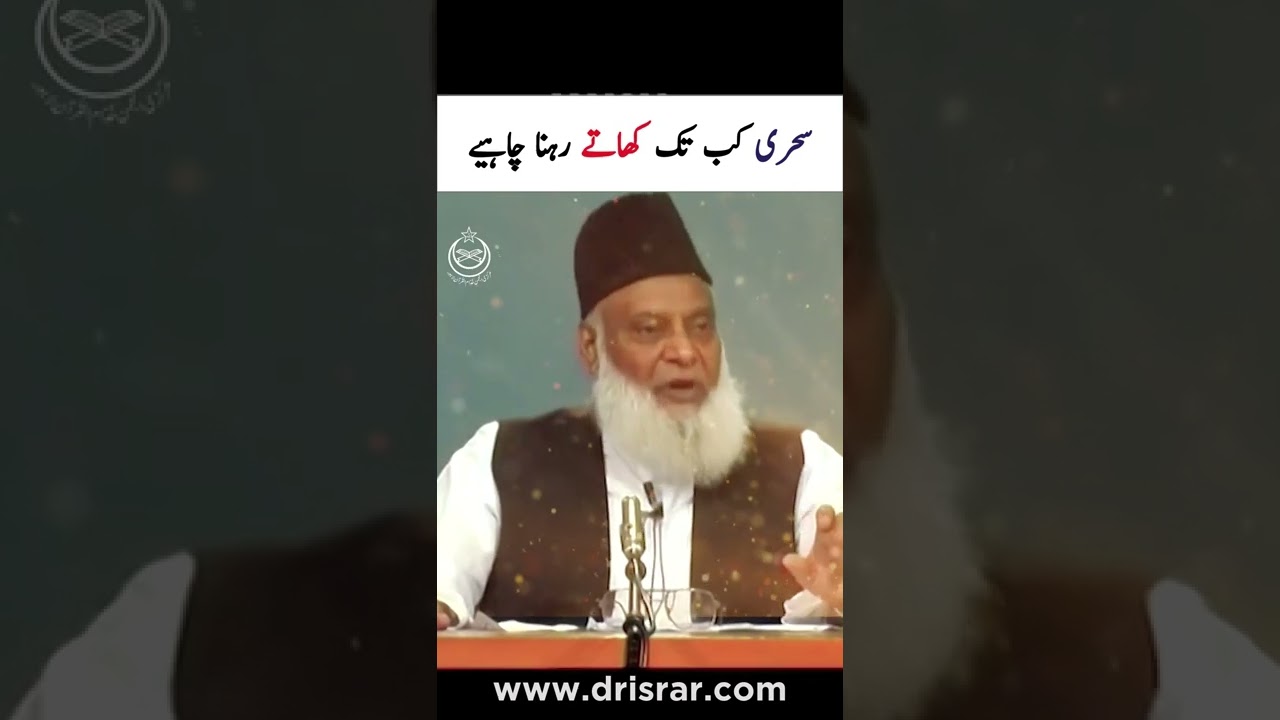
This lecture clarifies the permissibility of continuing to eat and drink until the white thread of dawn becomes distinctly separate from the black thread of night. It addresses excessive caution observed by some regarding the timing of *suhoor*, emphasizing that one can complete their meal even after the call to prayer. The speaker explains that the period of fasting begins at sunset and ends with the start of a new day, and that strict adherence to precise timing isn’t necessary, citing the Prophet’s allowance for finishing a drink even after the *azaan*. The emphasis is on the blessing in consuming the pre-dawn meal and avoiding unnecessary rigidity in its observance.
57
