Korte broek
Iqbal lamented that Muslims often treat the Quran merely as a ritualistic recitation, devoid of understanding and application. He observes that its use is frequently limited to hastening the passing of a dying person with Surah Yaseen. While acknowledging the importance of reading the Quran, Iqbal stresses its primary purpose is to serve as a comprehensive guide for life. He criticizes the lack of focus on implementing its principles and benefiting from its wisdom, reducing a profound source of guidance to a superficial practice. The core message is that the Quran’s potential remains untapped due to a lack of genuine engagement and a failure to integrate its teachings into daily life.

79

True piety (taqwa) isn't about outward appearances or rituals, but an internal state of consciousness and unwavering faith. It’s a complete immersion of one's personality in the principles of divine guidance. Genuine piety manifests as a consistent effort to please God and avoid disobedience, permeating the entire being with a distinct spiritual color. It resides in the heart and is intrinsically linked to faith. The Prophet Muhammad (peace be upon him) repeatedly pointed to his chest to emphasize that piety dwells within the heart, not in external displays.
43
Partial obedience is unacceptable; complete submission to divine commands is required. Selectively following religious dictates, driven by personal inclination, renders all obedience void. The Quran warns against accepting some scriptures while rejecting others, leading to disgrace in this life and severe punishment in the hereafter. Allah sees beyond superficial displays of piety and judges intentions. True devotion requires sincere faith and righteous actions, not merely outward rituals performed with ill-gotten gains. This lecture emphasizes the importance of wholehearted commitment to faith and the consequences of hypocrisy.
52
The Prophet Muhammad (peace be upon him) was asked about the most excellent form of *jihad*. He responded that the greatest *jihad* is the struggle against one’s own base desires (*nafs*) in obedience to God. This involves suppressing harmful inclinations, humbling oneself before God, and striving for spiritual purification. This internal struggle is superior to fighting in the path of God.
253
Sometimes, jokes are tolerated among friends, but sensitivity varies. A remark accepted on one day can deeply wound someone experiencing emotional vulnerability. Words, unlike physical wounds, leave lasting scars on the heart. The proverb highlights that while a sword’s wound can heal, a wound inflicted by language does not. Emotional pain is more enduring and difficult to recover from than physical injury. This bayan discusses the profound impact of language and the importance of mindful communication.
57
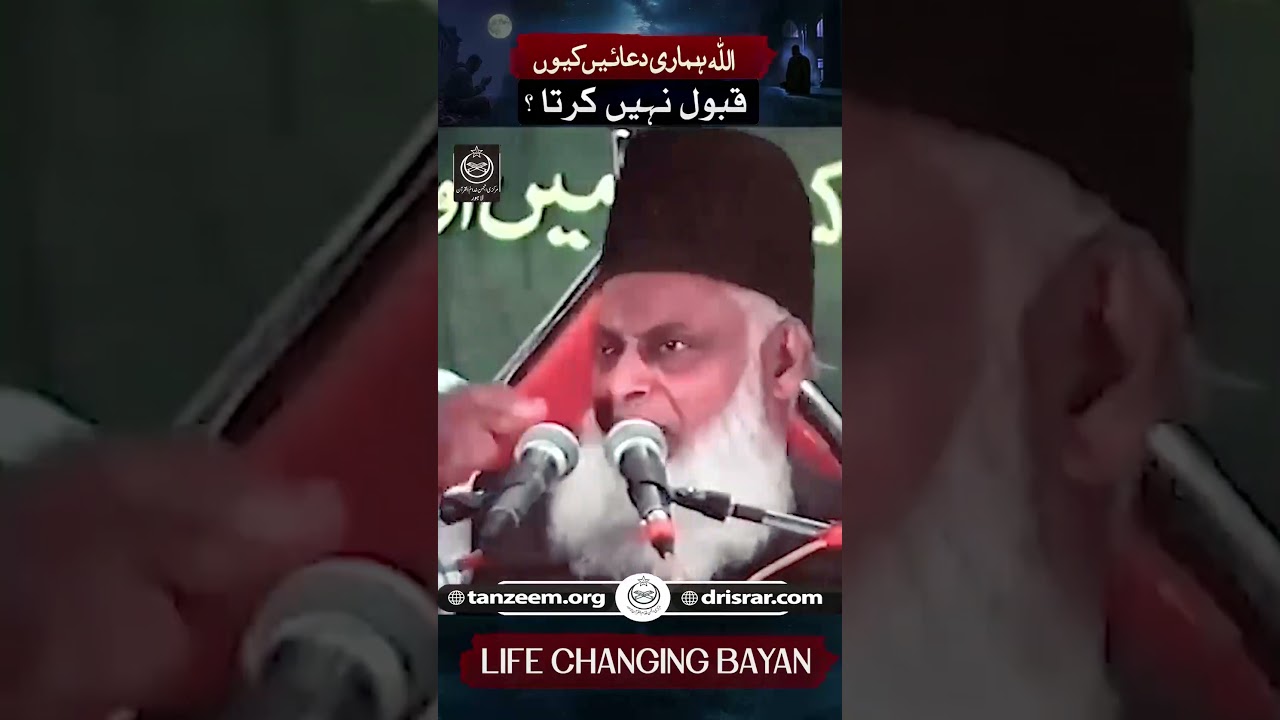
This lecture addresses why prayers often go unanswered. It asserts that simply performing religious rituals like Hajj and reciting the Quran are insufficient. True connection with God requires practical implementation of divine teachings in one’s life and community. The speaker emphasizes establishing faith within oneself, in one’s home, and then uniting with others in a covenant to uphold those principles. This involves a commitment to living by the entirety of revealed scripture, encompassing both Quran and Hadith, and acting upon its guidance.
65
