Shorts

This lecture details the practice of additional *takbirat* (declarations of greatness of God) during Eid al-Fitr prayers. The Hanafi school of thought prescribes six additional *takbirat*, while the Ahl-e-Hadith tradition follows twelve. The speaker emphasizes performing these *takbirat* while traveling to and from the Eid prayer, ideally using different routes to amplify the proclamation throughout the community. The core message urges believers to actively uphold and propagate their faith through striving, dedication, and even sacrifice, as a demonstration of gratitude for divine guidance. It stresses that upholding and establishing the true faith requires sincere effort and dedication, and that gratitude for Allah's guidance should manifest in a commitment to living a righteous life.

69

The human soul inherently possesses two crucial elements: divine knowledge ('ma'rifat-e-Rabbani') and divine love ('mohabbat-e-Rabbani'). These are present as a radiant light and inner warmth, often obscured by layers of heedlessness, desire, ego, and pride. These obscuring layers deepen with increased indulgence in worldly desires or the development of arrogance, concealing the soul's innate connection to the divine. Removing these layers reveals the glowing ember of spiritual awareness and affection already within.
55

Dr. Israr Ahmad explains that memorizing the Quran is one task, and *retaining* it is another. Forgetting memorized verses is a serious offense. Consistent recitation and revision are crucial for long-term retention. Many who claim to have memorized the entire Quran struggle to recall it throughout the year, requiring frequent re-memorization. He highlights that consistent practice is more valuable than merely claiming complete memorization, even if one is unable to perform regular prayers.
60

This lecture details the stages of the Day of Judgement according to Islamic eschatology. It describes the first trumpet blast causing widespread destruction and loss of consciousness, impacting all of creation in the heavens and on earth, except those whom Allah wills. The second blast initiates the resurrection, bringing all to a standing position. The third blast signifies the final judgement. The lecture further explains the descent of Allah, the splitting of the sky, the descent of angels, and the presentation of the Book of Records, prophets, and witnesses on that day. The lecture underscores the inevitability and gravity of the Day of Judgement and encourages contemplation of the afterlife.
62

This lecture details the life of Abu Bakr Siddique, focusing on his successful business prior to embracing Islam. It highlights how his dedication shifted from commerce to the propagation of the faith after accepting Islam. The lecture emphasizes Abu Bakr’s pivotal role in early Islamic outreach, specifically detailing how his efforts led six individuals from the 'Ashra Mubashara' (ten blessed companions) to accept Islam and join the Prophet's cause. The discussion underscores the transformation from worldly pursuits to devotion to religious work, and the sacrifices made for the sake of Islam.
44
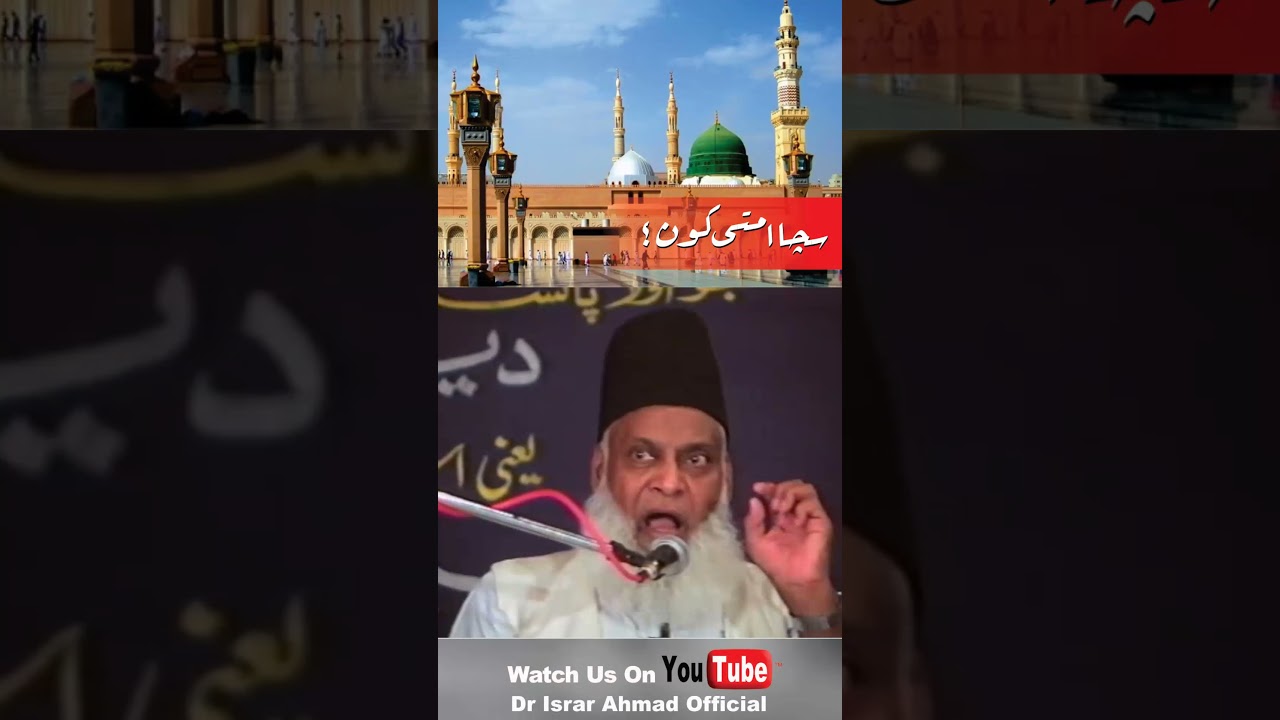
This lecture addresses the current global turmoil as a symptom of a deeper longing for the guidance embodied by the teachings of Muhammad. It emphasizes the need for Muslims to actively work towards fulfilling the objectives of the Prophet’s mission, focusing on spiritual and practical reformation. The speaker highlights that true progress for the Muslim community lies in returning to the principles and practices established at the beginning of Islam, prioritizing faith, devotion, and righteous living. The lecture warns against violent extremism and advocates for peaceful, constructive engagement in society. It emphasizes that reformation must stem from a genuine understanding and implementation of Islamic teachings.
58
