السراويل القصيرة
This lecture asserts that true sovereignty rests solely with God, rejecting the concept of human or national governance. It emphasizes that ownership, in its entirety, belongs to God, with all possessions – including one’s own body and progeny – being held in trust. The discussion refutes any form of human rule, whether individual kingship, national dominion, or popular sovereignty, deeming them forms of associating partners with God. The speaker stresses that God, or His appointed representatives, are the sole law-givers, and true authority emanates only from the Divine.

65
The lecture discusses the unreliability of weak narrations (riwayat) and their misuse in religious discourse. It emphasizes that many narrations circulating, attributed to sources like Bukhari, Muslim, Tirmidhi, and Ibn Majah, originate from books lacking proper authentication (isnad) like those by Khatib Baghdadi and Daylami. The speaker cautions against using narrations with broken chains of transmission – weak (za'if), unusual (shaz), or unsourced (mersal) – that cannot be traced back to Prophet Muhammad. The Quran is presented as the ultimate and most reliable source of guidance, surpassing all other narratives.
51
This lecture clarifies that the practice of *barat* (a wedding procession) is not an Islamic tradition. The *nikah* (marriage contract) in Islam is performed in the mosque, without lavish feasts or processions. The historical context reveals that the custom originated from pre-Islamic Hindu traditions, stemming from the need to protect the bride and her dowry during travel between villages. It was a protective measure against bandits, evolving into a large, extravagant procession with feasting and displays of wealth at the groom's home. The example of Prophet Muhammad's daughter, Fatima, demonstrates that even in her marriage to Hazrat Ali, there was no such elaborate procession; rather, a few women accompanied her after the *nikah*. The lecture emphasizes that this practice is a cultural addition, not a religious requirement.
93
The Quran is uniquely preserved compared to all other texts. The world’s scholars acknowledge this fact. Every letter and pronunciation within the various recorded recitations – Sab’a Qira’at and ‘Ashara Qira’at – is meticulously documented, detailing even the use of *zabar* or *zir* for each word. The official text was standardized by Hazrat Uthman (RA), a significant service to the Muslim community. This preservation extends to the precise documentation of variations in recitation, ensuring the integrity of the divine text.
54
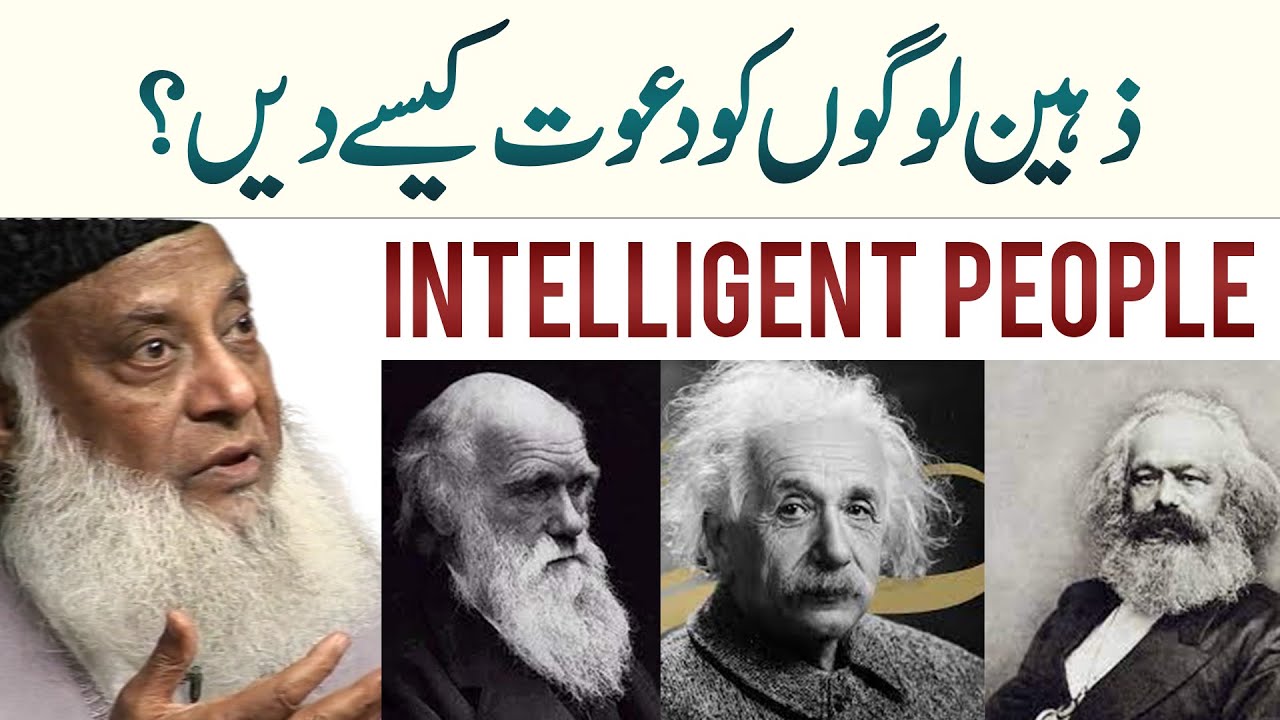
The lecture addresses the necessity of clearing the mind of conflicting ideologies, specifically Darwinian evolution and other Western philosophies, before accepting Islamic teachings. The speaker emphasizes that preconceived notions and intellectual impurities act as barriers to true understanding of religious concepts like the story of Adam and Iblis. He critiques the influence of thinkers such as Darwin, Freud, Marx, Adler, Bertrand Russell, and Sartre on contemporary thought, asserting that these philosophies obstruct a clear reception of Islamic principles. The speaker highlights the importance of intellectual purification to facilitate genuine faith and understanding.
46

The month of Rabi ul Awwal holds deep significance in the life of the Prophet Muhammad (peace be upon him). His birth and death both occurred in this blessed month, though the exact date of his birth is debated, with many scholars suggesting the 9th of Rabi ul Awwal. Historically, the 12th of Rabi ul Awwal was observed as a day of remembrance of his passing, involving charitable acts. Over time, this has evolved into a celebratory event. While the original Islamic festivals have diminished in prominence, new observances like Mawlid al-Nabi and Pakistan Independence Day have gained greater visibility. The Prophet’s arrival in Medina also occurred in Rabi ul Awwal. Focusing on the life and teachings of the Prophet during this month, without fixating on specific dates, encourages reflection, practical application, and emulation of his example, potentially offering solutions to contemporary problems.
45
