Shorts
This lecture asserts that true sovereignty rests solely with God, rejecting the concept of human or national governance. It emphasizes that ownership, in its entirety, belongs to God, with all possessions – including one’s own body and progeny – being held in trust. The discussion refutes any form of human rule, whether individual kingship, national dominion, or popular sovereignty, deeming them forms of associating partners with God. The speaker stresses that God, or His appointed representatives, are the sole law-givers, and true authority emanates only from the Divine.

65
Dr. Israr Ahmad discusses the succession of Dr. Arif Rashid, highlighting their shared background in medicine and a long-standing relationship spanning decades. He notes Dr. Rashid’s similar voice and demeanor, expressing hope that he will fulfill the responsibilities of his new position. Dr. Ahmad recalls Dr. Rashid attending his lectures since childhood, beginning in 1965, and the deep impact of those lessons on his formative years. He believes Dr. Rashid carries the essence of his teachings and thought processes.
59
When the Prophet Muhammad arrived in Medina, he observed that the Jewish community fasted on the tenth of Muharram (Ashura), commemorating the day the Israelites were saved from Pharaoh and his army. They explained this was a day of thanksgiving. The Prophet stated that Muslims, as followers of Moses, had a greater right to commemorate this event. He instructed Muslims to fast on both the ninth and tenth of Muharram to distinguish themselves from the Jews, who only fasted on the tenth. This practice marks the beginning of observing days of worship based on the traditions of earlier communities present in Medina.
42

The month of Rabi ul Awwal holds deep significance in the life of the Prophet Muhammad (peace be upon him). His birth and death both occurred in this blessed month, though the exact date of his birth is debated, with many scholars suggesting the 9th of Rabi ul Awwal. Historically, the 12th of Rabi ul Awwal was observed as a day of remembrance of his passing, involving charitable acts. Over time, this has evolved into a celebratory event. While the original Islamic festivals have diminished in prominence, new observances like Mawlid al-Nabi and Pakistan Independence Day have gained greater visibility. The Prophet’s arrival in Medina also occurred in Rabi ul Awwal. Focusing on the life and teachings of the Prophet during this month, without fixating on specific dates, encourages reflection, practical application, and emulation of his example, potentially offering solutions to contemporary problems.
45
The speaker discusses the erosion of fundamental human morality within the Muslim community of the Indian subcontinent, attributing it to roughly two centuries of colonial rule. This subjugation has diminished the inherent strength of character, leading to a prevalence of insincere promises and a lack of steadfastness. The speaker emphasizes that these core ethical principles are universal, present even among non-Muslims, yet historically lacking in certain tribal groups. A key point is the collective weakness in upholding commitments and demonstrating resilience.
69
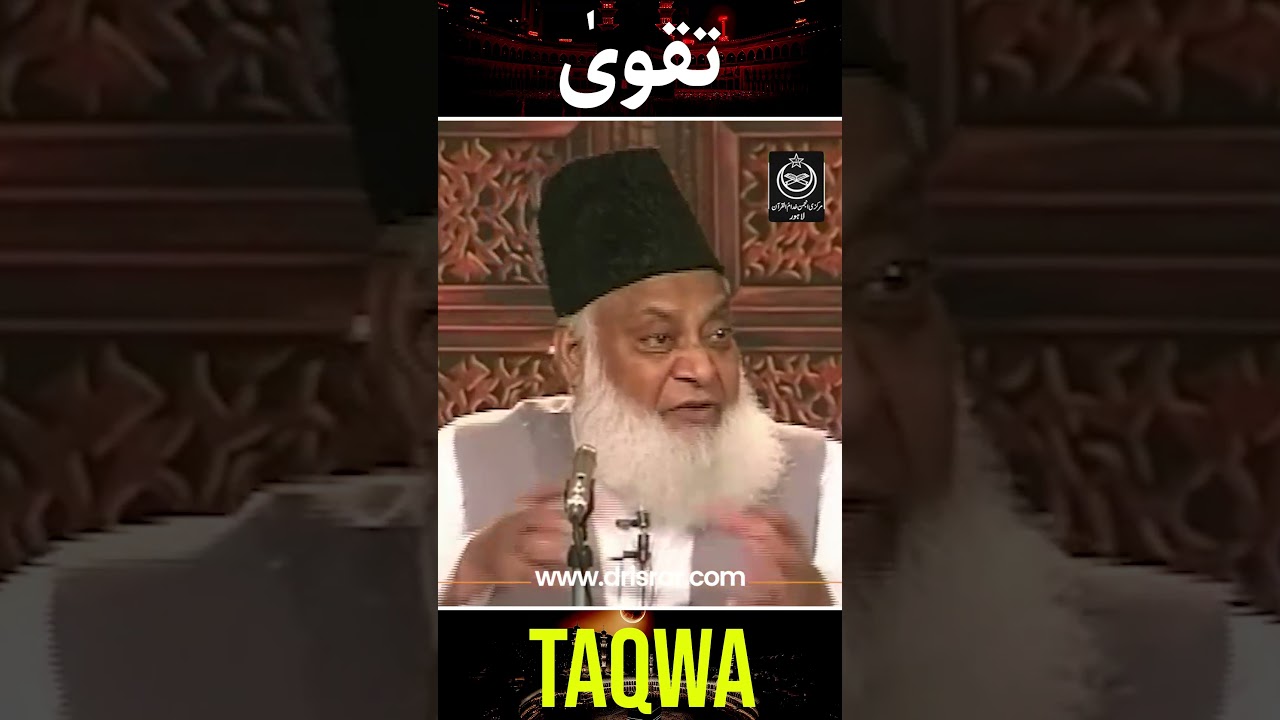
True piety (taqwa) isn't about outward appearances or rituals, but an internal state of consciousness and unwavering faith. It’s a complete immersion of one's personality in the principles of divine guidance. Genuine piety manifests as a consistent effort to please God and avoid disobedience, permeating the entire being with a distinct spiritual color. It resides in the heart and is intrinsically linked to faith. The Prophet Muhammad (peace be upon him) repeatedly pointed to his chest to emphasize that piety dwells within the heart, not in external displays.
40
