Kratke hlače
The text emphasizes that true life resides in the afterlife, not the material world. It critiques a materialistic focus, stating that people are lost in the pursuit of worldly possessions, mistakenly believing they are achieving something substantial. This pursuit leads to being lost in matter and consumed by materialism, exhausting all efforts within a limited scope. The core message is a rejection of prioritizing worldly gain over spiritual fulfillment and preparation for the afterlife.

44
This lecture details the signs and characteristics of the Dajjal, a figure in Islamic eschatology. It describes his immense power, including the ability to resurrect the dead, manipulate perceptions, control weather, and traverse vast distances instantaneously. The Dajjal will claim divinity and perform miracles, attracting followers through illusions and false promises. He will possess complete dominion over the universe and demonstrate his power by splitting a person in two and then restoring them. This bayān explains these prophecies as detailed in hadith.
66
The speaker describes a massive gathering of people traveling towards a destination, likely a religious event, emphasizing the unified message of monotheism (Tauheed) expressed by the participants. The continuous flow of vehicles and the sheer number of attendees highlight the scale of the event and the profound impact of the shared belief. The speaker recounts witnessing this procession firsthand, noting the unbroken line of lights stretching for miles.
45
This lecture clarifies that the home of the hereafter is reserved for those who abstain from seeking power, dominance, or causing corruption on Earth. It emphasizes that this reward is specifically for the righteous, those who prioritize piety and fear of God. The ultimate outcome and blessings of the afterlife are exclusively for the God-conscious, who will experience lasting peace and fulfillment through divine grace. The lecture highlights that true success lies not in worldly achievements but in cultivating inner righteousness and striving for God's pleasure.
61

This lecture discusses the transient nature of emotional turmoil and external influences. It emphasizes that intense feelings, like storms, eventually subside. Similarly, the impact of surroundings is temporary. The core message centers on the immediate necessity of repentance (toba) when one commits a wrong action due to heedlessness, passion, or environmental pressures. Genuine repentance, offered sincerely to God, leads to forgiveness. The speaker highlights that delaying repentance is unwise; sincere remorse erases sins. The lecture stresses that seeking forgiveness is a continuous process, particularly when succumbing to momentary weaknesses.
104
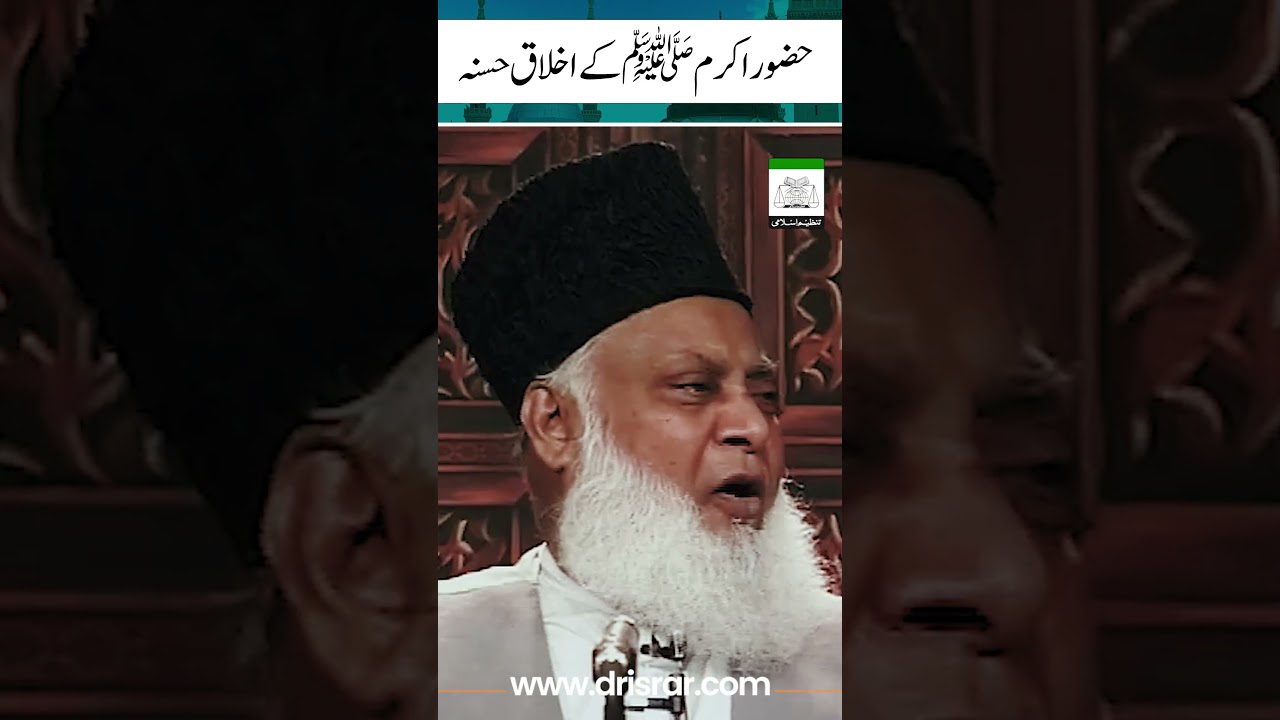
Dr. Israr Ahmad discusses the Prophet Muhammad’s (peace be upon him) remarkable humility and integration with his companions. He emphasizes the Prophet’s deliberate choice to present himself as an ordinary human being, eschewing any display of special status or privilege. The Prophet actively discouraged people from standing upon his arrival and mingled freely with his followers, sitting among them without distinction. This demonstrated a profound commitment to equality and accessibility, fostering a sense of unity and brotherhood among the early Muslim community. The speaker highlights that the Prophet’s approach was a conscious effort to remove barriers between himself and his companions, encouraging genuine connection and spiritual growth.
45
