Şort
We live under the illusion of possessing faith when, in reality, we hold mere beliefs passed down through generations, a bundle of inherited convictions stored within our communities. True faith, or *iman*, is characterized by certain knowledge—knowledge of certainty, experiential certainty, and the certainty of truth. This certainty is a connection, a realization of being observed by God, a presence felt deeply. It encompasses belief in life after death, in Paradise and Hell, and the fundamental truth that true life resides in the afterlife.

52

This lecture emphasizes the importance of fulfilling obligations to God and to humanity. It highlights the necessity of standing firm for justice, adhering to divine principles, and respecting revealed scriptures. The speaker stresses that true faith requires both upholding the rights of God – encompassing worship and obedience – and fulfilling the rights of others, including upholding justice and fairness. A key point is the responsibility to study, reflect upon, and act in accordance with the teachings of divine books like the Torah, the Gospel, and the Quran. The lecture concludes with a call to establish justice and follow the guidance revealed by God.
43
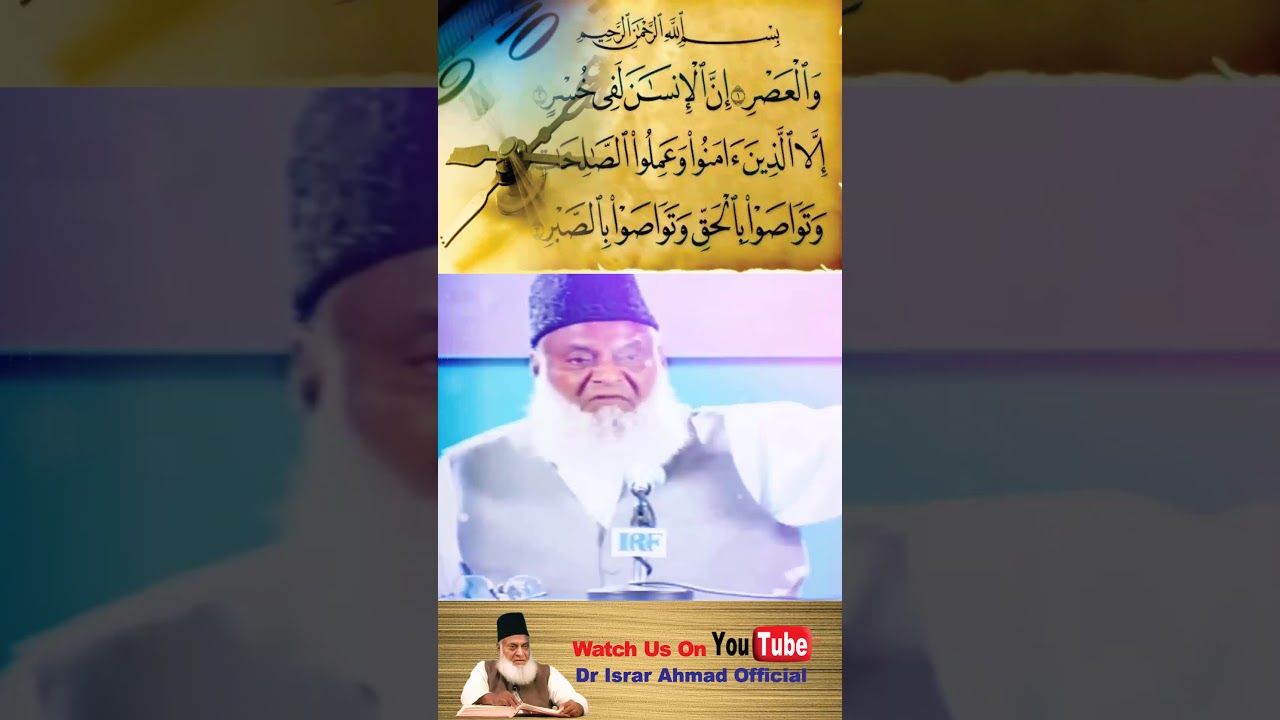
Humanity, universally, is in loss. Salvation is achieved through four essential conditions: faith, righteous deeds, advocating truth, and encouraging good conduct. These are not merely recommendations, but fundamental requirements for achieving deliverance. Without fulfilling these conditions, true salvation remains unattainable. This lecture details these prerequisites for spiritual success and a meaningful life.
212
This lecture explores the prophetic declaration that the message of the Prophet Muhammad (peace be upon him) was intended for all of humanity, referencing the Quranic verse, “And We have not sent you, [O Muhammad], except as a messenger to all people.” It discusses the incomplete realization of divine governance on Earth and emphasizes that the ultimate triumph of God’s religion over all of humankind is yet to be fully achieved. The lecture draws upon the poetry of Allama Iqbal to highlight the ongoing nature of this divine plan and the necessity for continued effort in establishing the dominance of the truth.
47

This lecture explores the concept of divine guidance and its profound impact on human life. It emphasizes that success and righteousness are not achieved through personal effort alone, but are gifts from God. The speaker highlights the importance of recognizing God's favor and the potential for life to drastically change with even the smallest deviation. It underscores that all praise and gratitude belong to God, who bestows guidance and directs individuals toward the right path. The lecture serves as a reminder of God's grace and the need for constant acknowledgment of His blessings.
58

This lecture addresses a critical deviation within the Muslim community, identifying a shift towards Murjiya – a state of complacency where outward claims of faith overshadow genuine inner conviction. It clarifies the distinction between legalistic faith, reliant on outward actions, and true faith rooted in sincere belief and heartfelt certainty. The speaker emphasizes that authentic faith necessitates the inseparable integration of belief and practice, where deeds are not merely supplementary but integral components of a living, breathing faith. The lecture warns against prioritizing outward adherence to rituals over cultivating genuine fear of God and hope for His mercy, advocating for a balanced state between these two essential qualities.
44
