Shorts
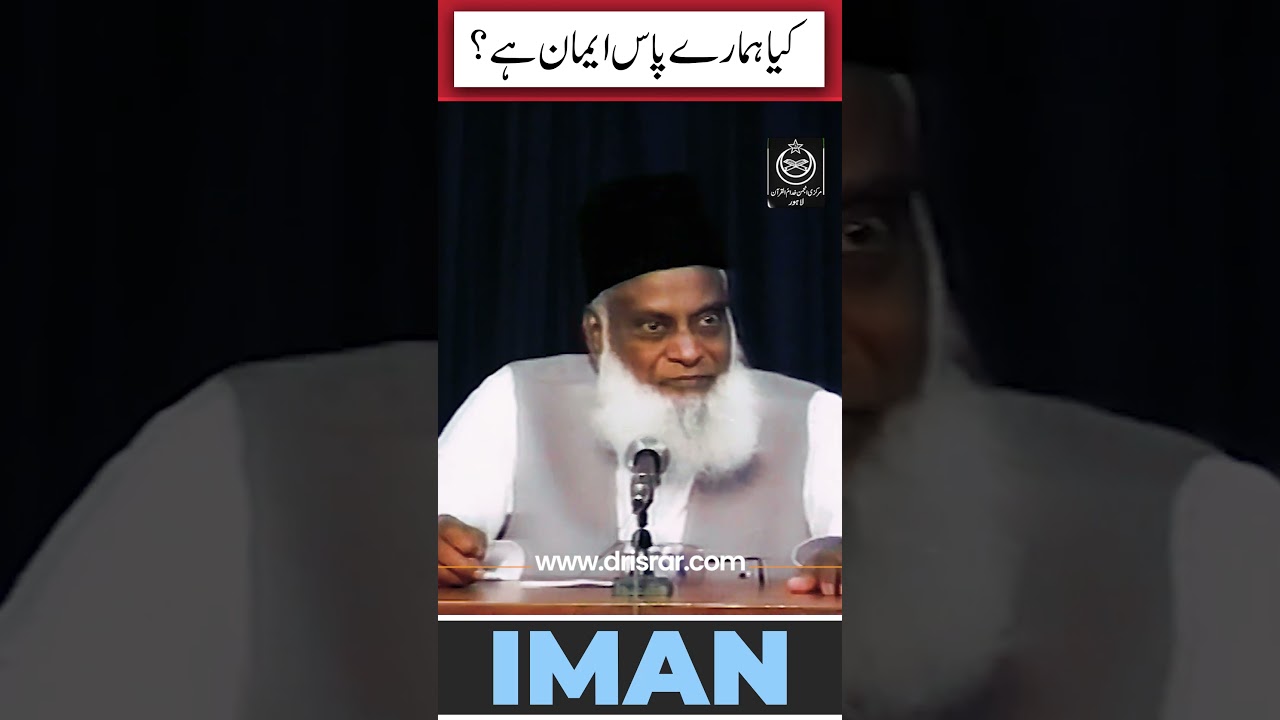
We live under the illusion of possessing faith when, in reality, we hold mere beliefs passed down through generations, a bundle of inherited convictions stored within our communities. True faith, or *iman*, is characterized by certain knowledge—knowledge of certainty, experiential certainty, and the certainty of truth. This certainty is a connection, a realization of being observed by God, a presence felt deeply. It encompasses belief in life after death, in Paradise and Hell, and the fundamental truth that true life resides in the afterlife.

52

This lecture explores the concept of commitment and its manifestation in various agreements, from simple employer-employee contracts to the complex social contract of marriage. It emphasizes that upholding one's commitments isn't contingent on external oversight, but stems from internal integrity and adherence to the terms agreed upon. The speaker highlights the responsibilities within marriage – the husband’s provision of sustenance, shelter, and the wife’s corresponding duties – framing marriage as a solemn social agreement demanding mutual respect and fulfillment of obligations.
36

True faith stems from acting solely for the pleasure of God. This lecture explains that complete devotion requires loving and hating, giving and withholding, all motivated by a desire to please God alone. Genuine goodness isn’t merely outward action, but the purity of intention behind it. A believer’s actions—love, dislike, generosity, and restraint—become complete when driven by a sincere desire for God’s acceptance and satisfaction. This complete devotion defines the essence of faith.
54

This lecture analyzes the French and Russian Revolutions, highlighting their incomplete nature. Both revolutions primarily altered the political structure while leaving core beliefs, social systems, values, and economic institutions largely unchanged. The Bolshevik Revolution uniquely transformed the economic framework by abolishing private ownership and nationalizing resources, yet it did not affect the fundamental beliefs or social values. This discussion emphasizes how revolutions often fail to achieve comprehensive societal change, focusing instead on specific structural adjustments.
64

The Quran was not revealed all at once, but gradually over a period of time. This approach served multiple purposes. It allowed people to comprehend and internalize the teachings progressively, fostering deeper understanding and personal transformation. The gradual revelation accommodated the capacity of the audience, ensuring they could reflect upon and integrate the message into their lives. This method facilitated a lasting impact on their intellect, mindset, and overall character. The Quranic verse (Surah Bani Israel 106) explicitly states this intentional fragmentation to aid in recitation and comprehension.
40

Dr. Israr Ahmad discusses the principles of Islamic commerce, emphasizing that Islam doesn't fix profit levels but discourages excessive profiteering. He explains that pricing is naturally regulated by market forces of supply and demand. When supply exceeds demand, prices fall. Conversely, when demand exceeds supply, prices rise. Imposing legal restrictions on pricing would lead to black market activity. He advocates allowing these natural market forces to operate freely.
54
