短裤
During the time of Lord Wellington, the British government offered Allama Iqbal a governorship in South Africa, with the condition that Begum Iqbal accompany him to all official events. Iqbal declined, stating that while he may be a flawed Muslim, he would not compromise his wife's modesty for a government position. This incident, documented by Maulana Maududi in *Batool* magazine (April 1978), highlights Iqbal’s commitment to Islamic values. He similarly refused to attend a foreign delegation where wives were expected to accompany their husbands, upholding his wife’s observance of *purdah* (veil).

90
The Quran fundamentally transforms an individual's worldview. Before encountering the Quran, a person might perceive the universe as a random, self-operating system driven by mindless matter. Afterwards, they recognize the existence of a single God – Allah – who is all-powerful, all-knowing, the Sustainer, and the Creator and Director of the universe. This realization shifts perspective from accidental creation to purposeful design and divine governance.
55
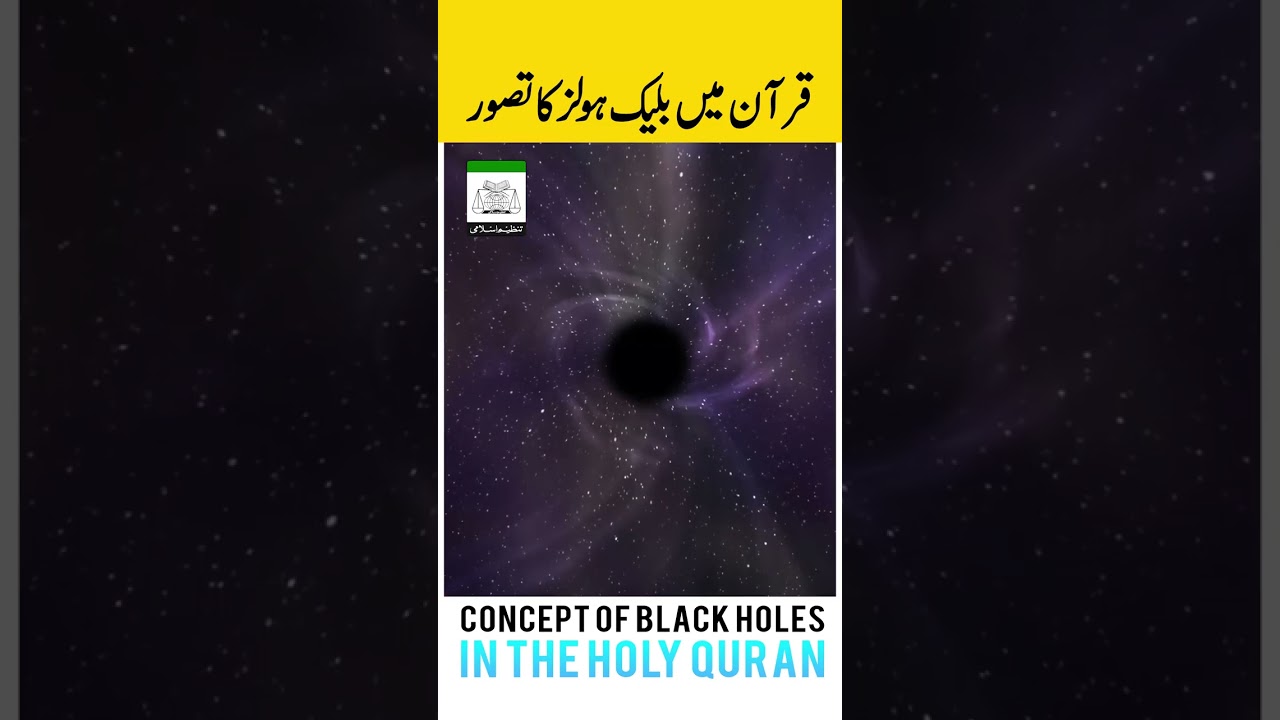
This lecture explores the profound significance of stellar phenomena as described in religious texts. It discusses the locations where stars disappear, emphasizing that the fading of stars represents more than just astronomical events; it symbolizes the disappearance of entire galaxies. The lecture highlights the scale of cosmic events, suggesting that the disappearance of galaxies is a monumental occurrence. It also touches on the concept of lost civilizations and the eventual fate of all things, referencing a great testimony being gradually revealed and a period of waiting associated with these celestial events.
69
The central theme of the Quran is faith in the unseen, encompassing knowledge of the metaphysical realm beyond sensory perception. This knowledge, revealed through Muhammad, forms the foundation of true understanding. The Quran provides guidance on both spiritual beliefs and practical life, addressing societal, economic, and personal conduct. It delineates permissible and forbidden actions, offering a comprehensive framework for a balanced and righteous life. This lecture clarifies that the Quran’s core message isn't simply a list of do's and don'ts, but a holistic system of belief and practice.
55
The greatest act of gratitude is towards one’s parents, a concept emphasized five times in the Quran. Simply *looking* at the Kaaba with reverence is considered an act of worship. Similarly, looking at one’s parents with love and respect is also an act of worship. This act of reverence, even without verbal interaction, holds significant spiritual reward. The Quran highlights the immense importance of honoring and showing affection to parents.
76
This lecture explores the concept of divine love and its separation from mere physical knowledge. It posits that true love resides in the spirit, not the body, and is a direct connection with God. The body is transient, originating from and returning to the earth, while the soul maintains a relationship with the divine that surpasses human comprehension. The speaker argues that modern knowledge often lacks the 'sword' of spiritual insight, leaving only the 'sheath' of empty information. The nature of the soul’s connection to the body and its divine origin remains largely unknown, highlighting the limitations of purely physical understanding.
25
