Kurze Hose
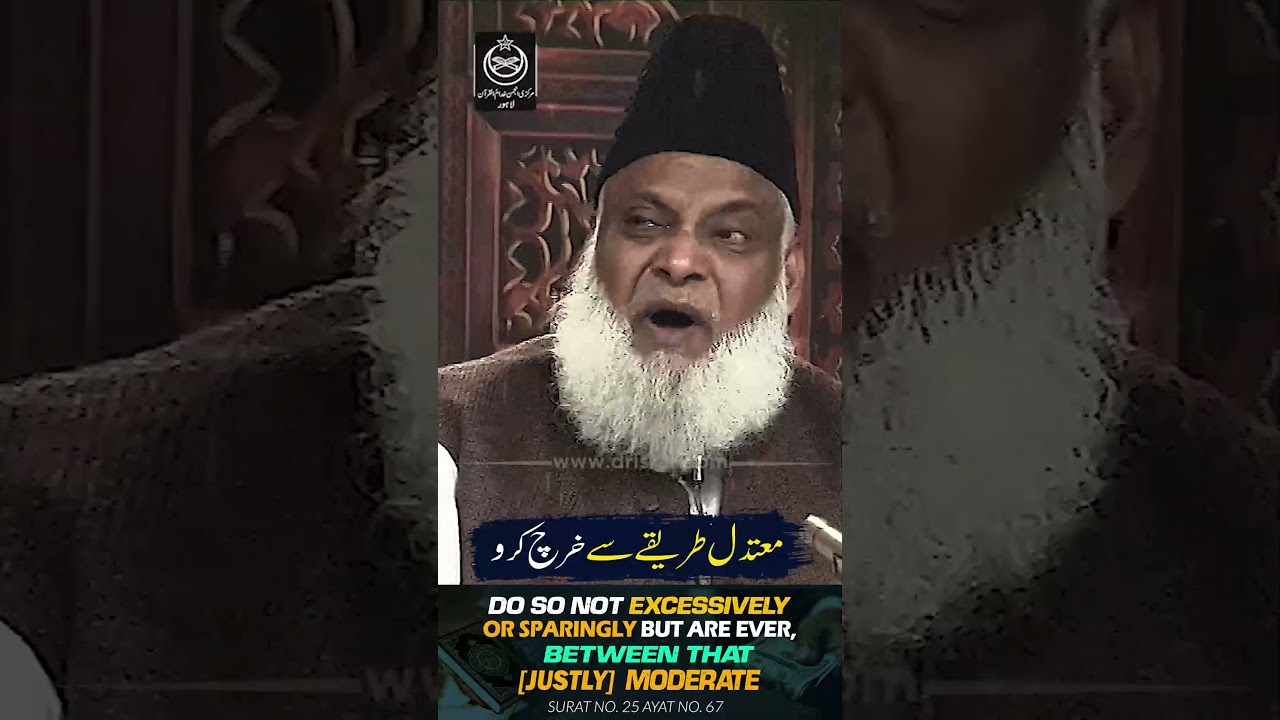
Extremism in charitable giving is undesirable. Intense emotion can lead individuals to impulsively donate all their wealth, potentially harming themselves. The Quran and the teachings of the Prophet emphasize the necessity of balance in spending. The verse from Surah Al-Furqan highlights that true believers spend neither stingily nor wastefully, but maintain a moderate course between these extremes. This approach ensures both the well-being of the giver and the effective distribution of resources to those in need. It’s crucial to consider consequences and adopt a reasoned approach to charity.

47
True prayer requires a conscious awareness of standing before God. The speaker explains that a spiritually dormant soul hinders genuine connection during prayer. A soul that is suppressed, crushed, or dead cannot facilitate a meaningful dialogue with the Divine. Even if one observes all the rituals of prayer – the five daily prayers, adopting a pious appearance – these acts are ineffective without a revived, communicative spirit. The speaker emphasizes that a connection with the Divine is established through the awakening of the soul and a direct, heartfelt conversation with God.
43
The lecture emphasizes the importance of reciting the Quran with a beautiful voice. It states that those who do not attempt to recite the Quran melodiously are not considered among the believers, referencing a hadith encouraging beautification of Quranic recitation with one's voice. Utilizing a gifted voice during recitation enhances the Quran’s inherent beauty and provides a unique experience to the listener.
48
The lecture clarifies that elections are a mechanism for operating a system, not for changing it. Participation in elections does not challenge the existing framework but functions within it. The speaker emphasizes that elections serve to run a system, rather than to fundamentally alter it, drawing a distinction between operational participation and systemic change.
112
Human beings are inherently predisposed to recognizing Allah. The knowledge and love of Allah reside within the soul, obscured by layers of neglect. Individuals fail to delve into the depths of their own hearts to rediscover this innate connection. This lecture explores the inherent human capacity for divine recognition and the importance of introspective spiritual inquiry. It emphasizes that recognizing Allah is not an acquired skill, but a natural inclination veiled by worldly distractions. The core message is a call to self-reflection and a return to the inherent spiritual awareness within each individual.
135
This lecture discusses the concept of *shirk-e-khafi* (subtle idolatry), which is more insidious than overt *shirk*. It explains how actions performed to gain the approval of others, even during religious practices like prayer, constitute a form of hidden idolatry. The speaker illustrates this with an example of prolonging prostration in prayer when observed by others, intending to display piety rather than solely seeking God’s pleasure. Recognizing *shirk-e-khafi* is presented as extremely difficult, akin to spotting a black ant on a black stone in the darkness. The lecture emphasizes that this is a matter of the heart and requires careful self-reflection.
89
