Celana pendek

The Quran refers to Allah as 'Mawla'. Some people address respected scholars as 'Maulana' as a sign of reverence. This lecture clarifies that using the term 'Maulana' is not shirk (associating partners with God). The word 'Mawla' has multiple meanings: master, helper, and even a freed slave. It’s a term of respect, similar to addressing someone as 'my master', and its use is permissible. Both 'Maulana' (plural) and 'Maulvi' (singular) convey the same meaning: ‘our master.’ Showing respect to others is not an act of shirk.

65

This lecture analyzes the French and Russian Revolutions, highlighting their incomplete nature. Both revolutions primarily altered the political structure while leaving core beliefs, social systems, values, and economic institutions largely unchanged. The Bolshevik Revolution uniquely transformed the economic framework by abolishing private ownership and nationalizing resources, yet it did not affect the fundamental beliefs or social values. This discussion emphasizes how revolutions often fail to achieve comprehensive societal change, focusing instead on specific structural adjustments.
73
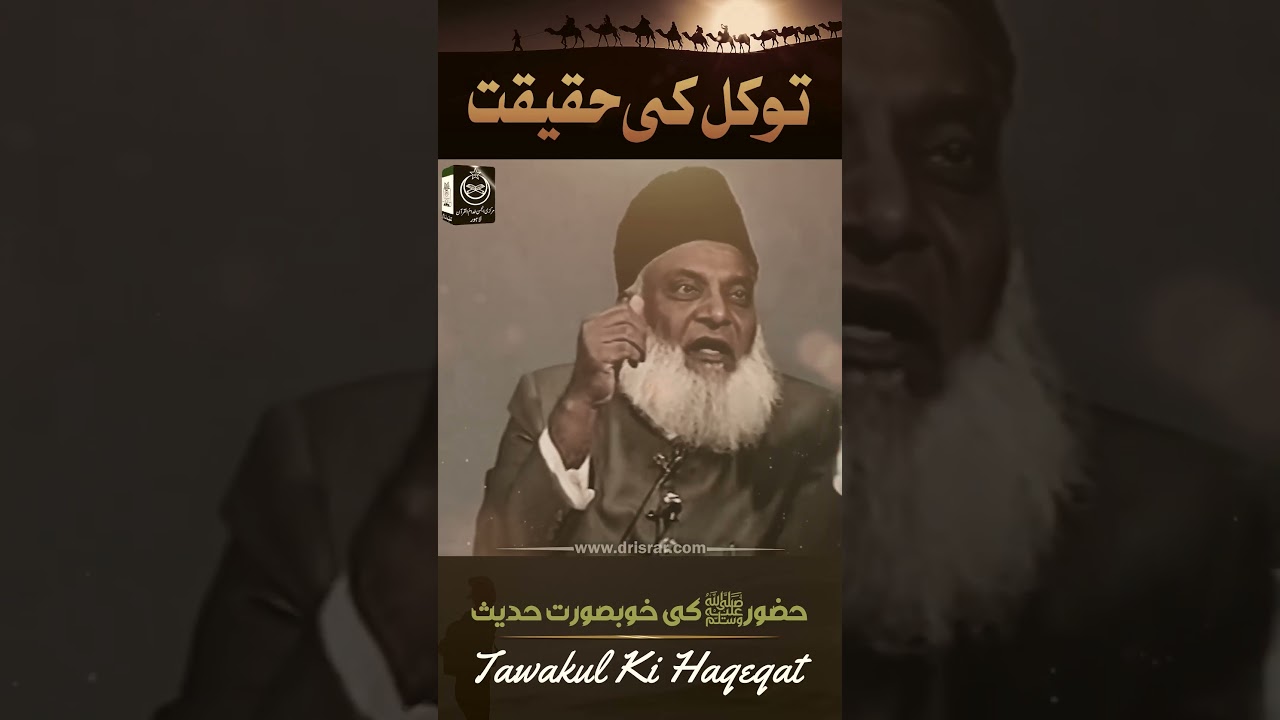
Dr. Israr Ahmad discusses the balance between intellect and emotion, emphasizing that while reason guides us in understanding goals and direction, it is passion that fuels action. He uses the analogy of an Arab Bedouin tying a rope to their camel’s leg to prevent escape, representing practical precautions. The Bedouin then ties the rope to their head to symbolize a commitment to a path, trusting in God after taking necessary steps. He illustrates this with the story of Prophet Ibrahim and the fire of Nimrod, highlighting that faith should not negate responsibility or practical measures. True devotion requires both action and reliance on a higher power, and prioritizing worldly survival over divine purpose is unacceptable.
54

True servants of God walk with humility on Earth. This entails a gentle gait, lowered gaze, and a modest demeanor. They avoid arrogance, forceful strides, and any display of pride. Their movement is characterized by grace, composure, and a mindful awareness of their position before God. This manner of walking reflects inner piety and a recognition of God’s blessings.
64

This lecture explores the connection between faith in God and the absence of fear and grief. It argues that true belief manifests as inner peace and confidence, even in the face of adversity. The speaker emphasizes that a troubled heart indicates a lack of complete trust in God’s sovereignty. Experiencing peace and freedom from anxiety are considered concrete proofs of genuine faith and a solidified connection with the Divine. The lecture highlights that reliance on God is the only path to overcoming these negative emotions and achieving true contentment.
61
The core demand of faith is singular and absolute. Fulfilling this single requirement guarantees salvation, success, guidance, and ultimate happiness. This lecture emphasizes the simplicity and completeness of this divine demand, highlighting its all-encompassing nature and its connection to achieving true fulfillment in life. It underscores that adherence to this single principle unlocks all blessings and leads to a meaningful existence.
89
