ショーツ
The Quran refers to Allah as 'Mawla'. Some people address respected scholars as 'Maulana' as a sign of reverence. This lecture clarifies that using the term 'Maulana' is not shirk (associating partners with God). The word 'Mawla' has multiple meanings: master, helper, and even a freed slave. It’s a term of respect, similar to addressing someone as 'my master', and its use is permissible. Both 'Maulana' (plural) and 'Maulvi' (singular) convey the same meaning: ‘our master.’ Showing respect to others is not an act of shirk.

65
A nation possessing divine scripture and law, claiming to follow the messenger of God, becomes God’s representative on Earth. However, if its actions contradict this claim, it becomes worse than non-believers and invites divine punishment. The lecture emphasizes that merely professing faith is insufficient; practical adherence to divine principles is crucial for fulfilling the role of a representative nation and avoiding God’s wrath. This highlights the profound responsibility borne by a nation claiming religious affiliation.
236
This reflection contemplates the human condition, questioning the meaning of existence beyond mere biological survival. It explores the stages of life – childhood, adolescence, youth, and old age – and asserts that true life transcends this temporary physical realm. The speaker posits that our earthly existence is a brief, evaluative period—a test—within a larger, eternal reality. This life is not the entirety of being, but a small segment, a temporary pause before returning to a perpetual, youthful existence. The core message is that the purpose of life lies beyond this transient world, within a spiritual and enduring context.
59
This lecture details a specific, undisclosed hour on Friday when prayers are believed to be particularly effective. Various interpretations exist regarding its timing. Some scholars suggest it's the period between the two khutbas during Jummah prayer. Others believe it spans from immediately after the Jummah prayer until Asr. Consequently, many observant Muslims spend this time in mosques, engaging in remembrance and recitation of the Quran. The precise timing remains intentionally concealed, adding to its spiritual significance.
67
This lecture analyzes the power dynamics within a political system, asserting that media, particularly television, has become a dominant force, exceeding the influence of the traditional fourth estate. It argues that media outlets, especially those controlled by specific interests, shape public opinion and restrict independent thought. The speaker contends that this control effectively holds the nation hostage, dictating beliefs and perspectives. The analysis ultimately suggests a reduction in the pillars of power from four to three – the executive, judiciary, and legislature – due to the manipulative power of modern media.
39
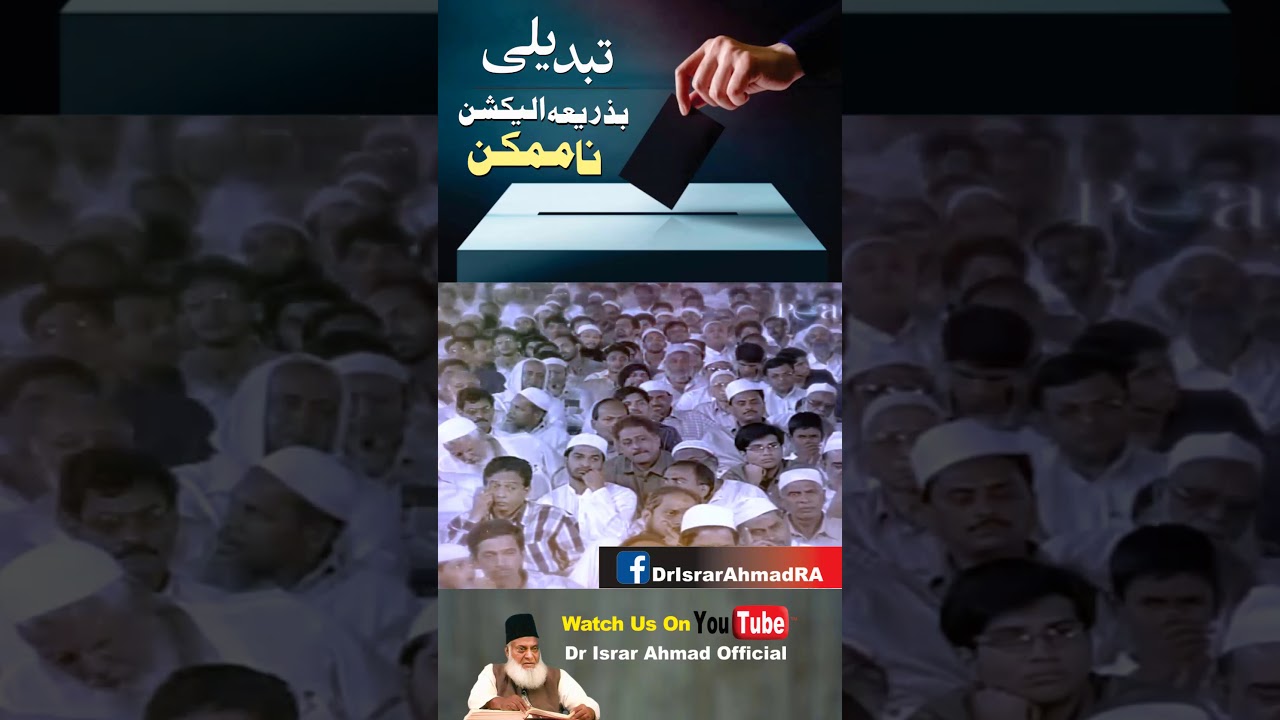
The lecture clarifies that elections are a mechanism for operating a system, not for changing it. Participation in elections does not challenge the existing framework but functions within it. The speaker emphasizes that elections serve to run a system, rather than to fundamentally alter it, drawing a distinction between operational participation and systemic change.
118
