Shorts

Musab bin Umair, a companion of the Prophet Muhammad, was a standard-bearer in the Battle of Ahzab. Despite suffering severe injuries—losing both hands while defending the Muslim flag—he refused to let it fall. He held the flag with the remnants of his arms until he was martyred. A problem arose during his burial as the cloth covering his body was too small to cover his head and feet simultaneously. The Prophet Muhammad instructed his followers to cover his head and place grass over his feet.

64

Fasting cultivates self-control by imposing restrictions not only on prohibited things but also on permissible enjoyments. This practice aims to develop restraint throughout the year, extending beyond the month of Ramadan. The purpose of these limitations is to foster discipline and the ability to control one’s desires and impulses, even when not explicitly forbidden, leading to a strengthened will and self-governance. This self-control is the primary wisdom behind the practice of fasting.
64

This lecture critiques the modern banking system, arguing it is fundamentally based on interest (riba) which constitutes a declaration of war against God and His Messenger. The speaker asserts that the claim a system cannot function without interest is an expression of disbelief in God’s knowledge and provision. It implies either God was unaware of a future where interest-free systems would be necessary, or He prohibited something essential. The argument highlights that God does not burden any soul beyond its capacity, and therefore, reliance on interest demonstrates a lack of faith in divine support and provision.
79

This lecture explores the spiritual state of having one’s heart opened by God for Islam, contrasting it with the darkness of spiritual hardness. It highlights that divine guidance illuminates the heart, providing inner understanding and a connection with God. Those who reject this guidance and whose hearts become hardened against remembrance of God face destruction and are clearly astray. The lecture emphasizes that a receptive heart is essential for faith and spiritual growth, while a hardened heart leads to misguidance and ultimate loss.
77
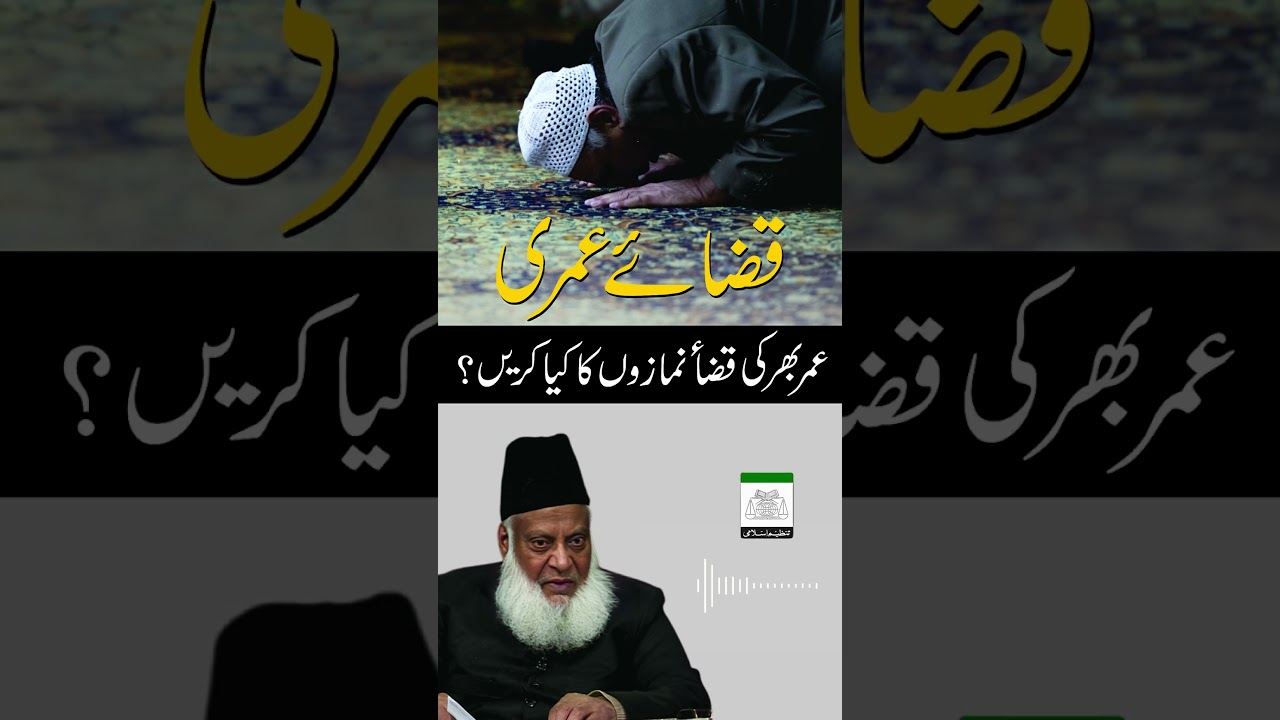
This lecture clarifies the conditions for sincere repentance (tawbah) and its implications regarding past sins. It explains that genuine repentance, marked by remorse and a commitment to abstain from sin, leads to Allah's forgiveness. Regarding missed prayers, the speaker suggests making up for them as if they were voluntary prayers (nawafil). For rights violated against others, repentance requires seeking forgiveness from the wronged, compensation, or facing consequences in the afterlife, with potential recompense through good deeds or bearing the burden of sins. Complete and valid repentance serves as expiation for all sins.
43

Taghut refers to anything that transgresses the boundaries of worship and obedience to God. It originates from ‘tagha’, meaning to exceed limits. When something, be it an individual, institution, or state, oversteps the bounds of devotion intended solely for God, it becomes Taghut. This lecture defines Taghut as any entity that demands allegiance and submission outside of God’s commands. It emphasizes that the essence of worship is submission within defined limits, and exceeding these limits constitutes an act of Taghut. The concept extends beyond individuals to encompass systems and ideologies that usurp divine authority and demand absolute obedience, leading to a deviation from true worship.
46
