Shorts
The lecture clarifies the distinction between being a Muslim—one who outwardly professes the faith—and a *mumin*—a true believer. It explains that merely claiming faith is insufficient; genuine belief requires complete trust in God and His Messenger, coupled with striving in His path with both wealth and life. The speaker references Surah Al-Hujurat, verse 14, highlighting that true faith enters the heart and manifests in dedicated action and sacrifice. A Muslim may adhere to the rituals, but a *mumin* embodies the complete essence of faith through unwavering dedication and continuous struggle for the sake of Allah.

78
This lecture details three elements that lead to salvation and three that lead to destruction. Salvation is achieved through fear of God in both private and public, speaking the truth regardless of anger or pleasure, and fulfilling one’s obligations. Destruction stems from following one's desires, excessive love of wealth, and self-admiration. The most destructive of these is a bloated ego and considering oneself superior.
48
Islam’s core principle is the absolute oneness of God (Tauheed). All forms of goodness, righteousness, and guidance stem from this central belief, representing branches, leaves, and blossoms of a blessed tree. Conversely, evil, sin, and error—whether in belief, thought, or action—are rooted in *shirk*—associating partners with God—and represent the branches of a poisonous tree. Every negative element, in any form, ultimately connects back to this fundamental deviation from pure monotheism.
42
This lecture emphasizes the importance of verifying hadith before accepting them as truth. It advises against outright rejection but encourages pausing for research to confirm authenticity. The speaker highlights the immense effort undertaken by scholars in hadith compilation and stresses that dismissing hadith based on personal opinion is against established beliefs. The lecture advocates for careful consideration, investigation, and confirmation that a hadith is sound and conforms to established principles before acceptance. It cautions against hasty judgments and encourages a scholarly approach to understanding religious narrations.
71

Dr. Israr Ahmad explains the importance of performing the movements of prayer (Salat) correctly and with complete attention. He highlights that rushing through the postures – especially transitions between standing, bowing (Ruku), prostration (Sujud), and sitting – constitutes a deficiency in prayer. Complete upright posture after rising from each movement is crucial, ensuring a moment of stillness (Qawmah) before proceeding. This meticulous adherence to the rituals, coupled with appropriate supplications during the sitting position, constitutes a truly accepted prayer.
67
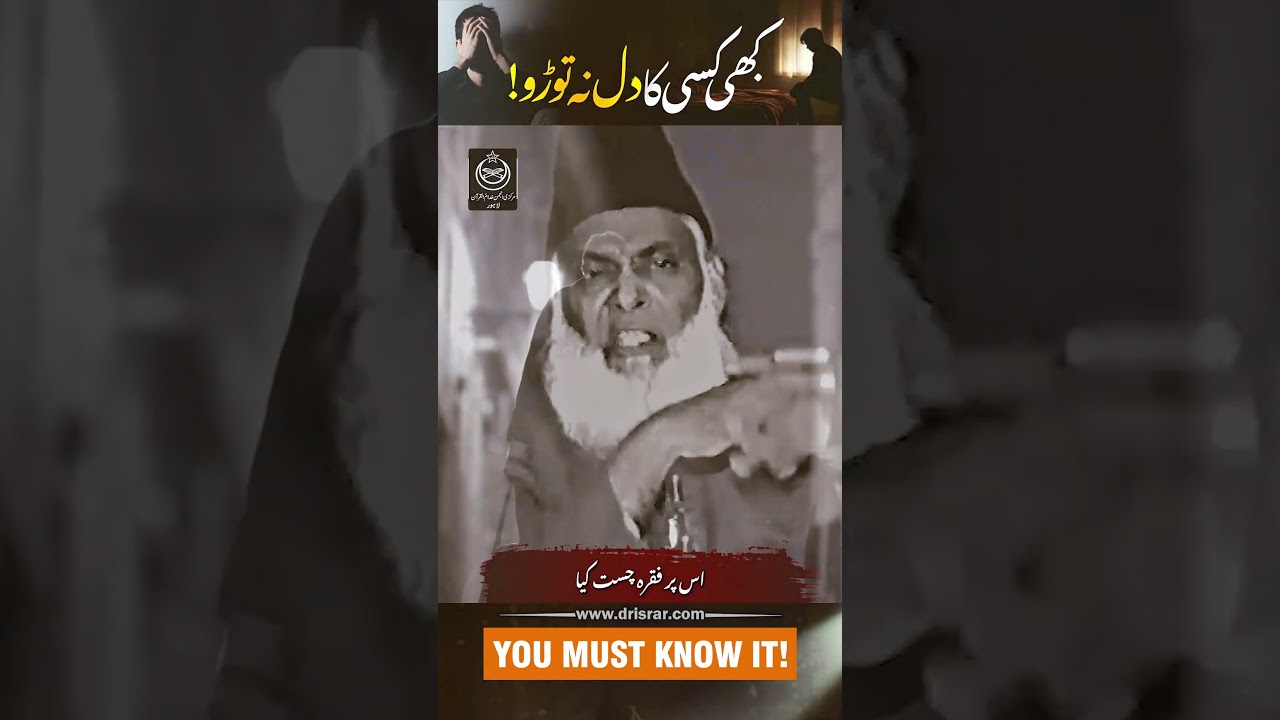
This lecture explores the destructive nature of greed (bakhili) and the dangerous state of self-sufficiency (istighna). It contrasts those who are mindful of others’ feelings and seek forgiveness with those who are indifferent and act without regard for consequences. The speaker emphasizes that a lack of empathy leads to spiritual ruin, ultimately culminating in the severe consequences of the afterlife. The discourse highlights the importance of humility, consideration for others, and seeking repentance to avoid the path of destruction.
50
