Kurze Hose
Dr. Israr Ahmad discusses the differences between Christian and Islamic marriage ceremonies. He highlights that in Christian weddings, the bride and groom stand face-to-face before the priest, openly professing their acceptance of each other. This contrasts with the Islamic practice where the bride and groom often remain somewhat secluded during the Nikah. He observes the respect afforded to the church and the priest within the Christian tradition, and contrasts this with the often-devalued position of the Imam or Nikah officiant in some Muslim communities. The lecture emphasizes the importance of dignity and reverence in religious practices.

69
True worship begins with obedience, but its essence is love. Obedience is the visible form, while love is the underlying spirit. Complete obedience to Allah involves total submission at all times. The path to Allah's obedience is through obedience to His Messenger, Muhammad (peace be upon him). One must strive to reach a level of devotion where the Prophet is more beloved than one's parents and children, and all of mankind. This devotion is a prerequisite for true faith. Without this level of love for the Prophet, all other actions are meaningless.
44
True well-wishing stems from sincerity and a genuine desire for another’s betterment. It requires approaching someone lost in ignorance or error with compassion, not arrogance or intellectual superiority. Effective guidance involves embodying the principles you preach; hypocrisy renders your message ineffective. Genuine concern means prioritizing the other person’s well-being and acting with consistency between words and deeds. Those who command good but fail to practice it themselves contradict their own message and discredit their efforts. True guidance requires internalizing the principles you advocate.
61
God’s knowledge of human actions does not negate the necessity of trials. Trials serve a dual purpose: to reveal to God what individuals will do, and to make individuals consciously aware of their own deeds. This record, maintained by angels, will be presented to each person, demanding proof of their actions. God isn't testing out of ignorance, but to establish proof of worth. The ultimate purpose is to demonstrate one’s value and determine their standing and rank in God’s eyes. This process emphasizes the importance of proving oneself and earning one's rightful place.
61

This lecture critiques the modern banking system, arguing it is fundamentally based on interest (riba) which constitutes a declaration of war against God and His Messenger. The speaker asserts that the claim a system cannot function without interest is an expression of disbelief in God’s knowledge and provision. It implies either God was unaware of a future where interest-free systems would be necessary, or He prohibited something essential. The argument highlights that God does not burden any soul beyond its capacity, and therefore, reliance on interest demonstrates a lack of faith in divine support and provision.
85
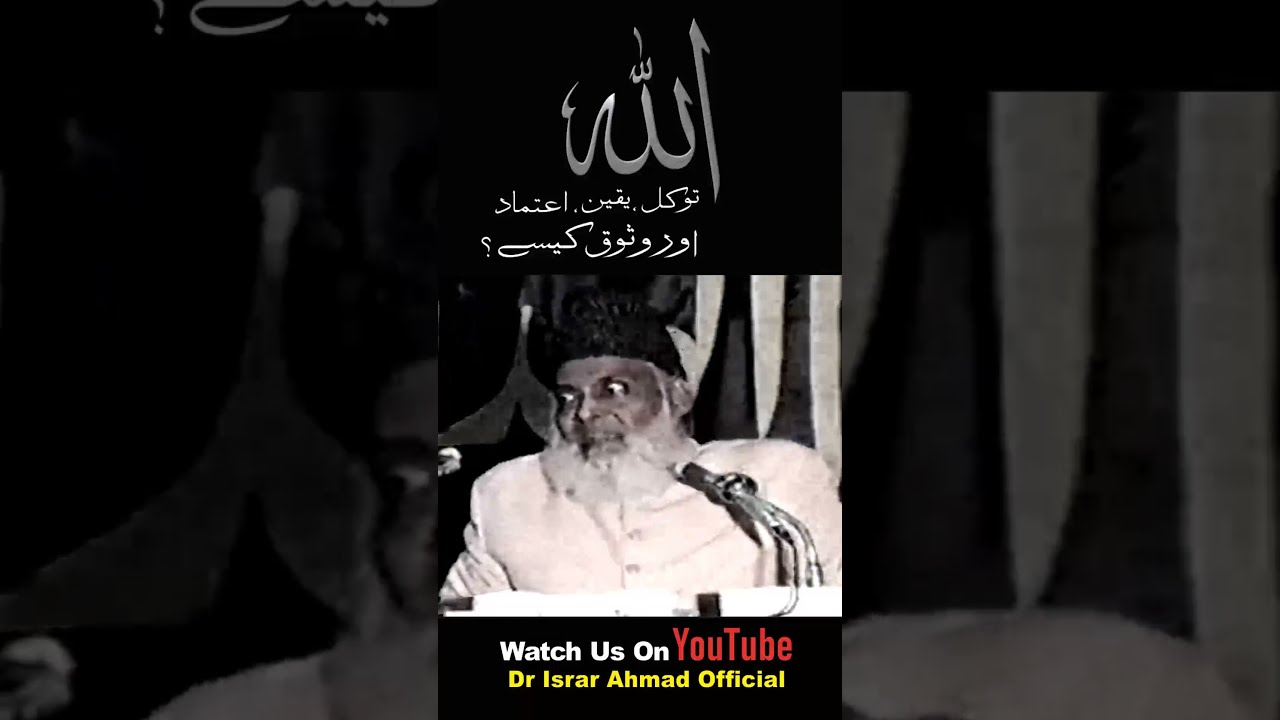
This lecture explores the principle of sincere intention in faith and its direct correlation with receiving divine assistance. It explains that genuine help from God is contingent upon a pure heart and a truthful relationship with Him. The speaker emphasizes that self-deception and hypocrisy prevent one from experiencing God’s support, while sincerity fosters trust and assurance. A sincere devotee believes in God’s unwavering companionship, mirroring the loyalty found in virtuous human relationships. Ultimately, it highlights that God will fulfill the needs of those who approach Him with honesty and a pure heart.
74
