Shorts
This lecture discusses the Islamic principle of prioritizing ease and avoiding unnecessary hardship, particularly concerning fasting during illness or travel. It highlights an incident during a military expedition where some individuals, despite being weakened, insisted on fasting, causing them to collapse. The Prophet Muhammad (peace be upon him) observed this and discouraged fasting in such circumstances, emphasizing that Islam aims to facilitate, not burden, its followers. The core message is that self-inflicted hardship is not a virtue but a misunderstanding of religious principles, and that the purpose of religious teachings is to promote ease and well-being.

62

During the time of Lord Wellington, the British government offered Allama Iqbal a governorship in South Africa, with the condition that Begum Iqbal accompany him to all official events. Iqbal declined, stating that while he may be a flawed Muslim, he would not compromise his wife's modesty for a government position. This incident, documented by Maulana Maududi in *Batool* magazine (April 1978), highlights Iqbal’s commitment to Islamic values. He similarly refused to attend a foreign delegation where wives were expected to accompany their husbands, upholding his wife’s observance of *purdah* (veil).
89
A nation claims to believe in God, the Prophet, the Quran, and Sharia, yet fails to fully implement it. Partial adherence is deemed worse than outright rejection. The Quran, specifically Surah Baqarah verse 85, warns that selective acceptance of divine law leads to severe punishment. Those who choose this path face disgrace in this world and intense torment on the Day of Judgment. This lecture emphasizes the necessity of complete submission to the entirety of Sharia for true faith and salvation.
57
This lecture explores the distinction between faith and worldly affairs. It asserts that belief in one God, many gods, or no god is a matter of personal choice. Religious practices like fasting and worship in various places of worship are permitted. Civilization, politics, economics, and social systems – collectively termed ‘collective systems’ or ‘neopolitic-socio-economic systems’ – are separate from religion. These systems, constituting the fabric of societal organization, fall outside the realm of religious doctrine and are governed by different principles.
64
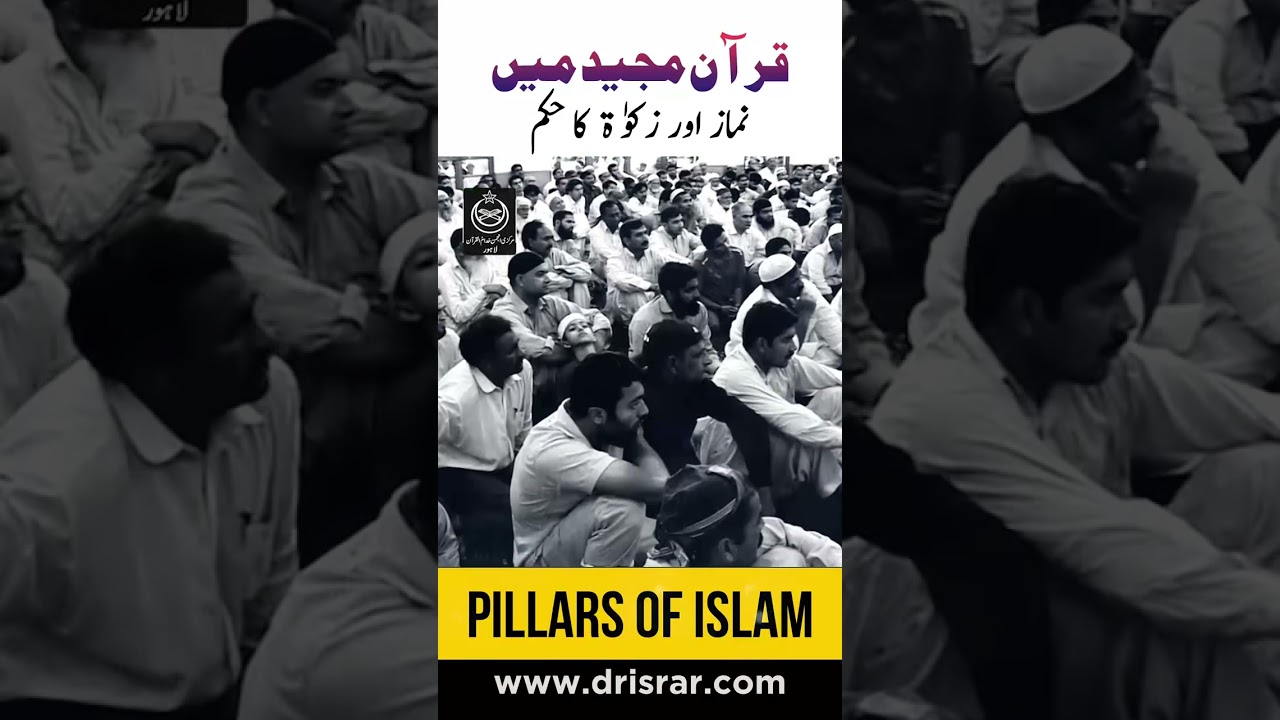
The Quran places significant emphasis on the performance of Salah (prayer) and Zakat (charity), repeatedly outlining their importance. While instructions regarding fasting and Hajj are present, the Quran dedicates numerous verses to Salah and Zakat. The complete rulings on fasting are concentrated within six verses of Surah Baqarah, while mentions of fasting elsewhere primarily relate to expiation. Fasting, as an independent pillar of Islam, lacks the same consistent, detailed emphasis as Salah and Zakat throughout the Quran.
59
True success isn't found in wealth or power, as exemplified by figures like Qarun, Pharaoh, and Nimrod, who ultimately failed despite their riches and authority. Conversely, Abu Dharr Ghifari, despite his poverty, achieved genuine success. Allah elevates certain individuals to a status where even an unintentional oath is honored. This lecture highlights that real triumph comes from divine favor, not material possessions or worldly influence. The video emphasizes the importance of spiritual elevation and reliance on Allah for achieving lasting success and fulfillment.
59
