Shorts

This lecture emphasizes the importance of inviting people to the path of God with wisdom, good counsel, and respectful debate. It highlights that delivering the message of God is a duty, best fulfilled through gentle persuasion and eloquent communication. The speaker stresses that even in disagreement, one must maintain a dignified and courteous approach.

43

This lecture emphasizes that the completion of divine law through the Prophet Muhammad (peace be upon him) necessitates adherence for personal growth and fulfillment. It clarifies that Islamic law is not a burden but a guide for navigating life’s challenges, using the analogy of road signs on a dangerous mountain path. These signs, like the tenets of Shariat, are preventative measures designed to ensure safety and lead individuals towards the purpose for which they were created by God. The speaker highlights that restrictions within Shariat are not arbitrary, but rather safeguards for one’s wellbeing and spiritual development.
60

This lecture emphasizes the importance of learning Arabic to understand the Quran. It addresses the paradox of educated individuals lacking religious literacy, highlighting the financial strain families endure to provide education that doesn’t prioritize foundational Islamic knowledge. The speaker urges parents to invest in their children’s spiritual development by prioritizing Arabic and Quranic studies, framing it as a continuous charitable act. He appeals to prioritize this education, even amidst financial hardship, as a legacy of faith and understanding for future generations. The lecture stresses the value of dedicating nine months to learning Arabic and comprehending the Quran's message.
68

This lecture emphasizes that true religious devotion requires personal piety and the practical implementation of faith within one’s own life and sphere of influence. The speaker cautions against merely constructing physical structures like mosques without concurrent self-improvement and organized, constructive action. He warns that disorganized groups can cause disruption and impede meaningful progress. The core message is that establishing faith within oneself and one’s immediate surroundings is the foundational step before attempting wider religious work.
60

During the Hijra, when the Prophet Muhammad (peace be upon him) and Abu Bakr (may Allah be pleased with him) were in the cave of Thawr, they feared discovery. Abu Bakr expressed concern that even a glance inside would reveal them. The Prophet reassured him, reminding him of God’s support. Consequently, Allah sent down tranquility upon them and reinforced them with unseen forces. This event resulted in the subjugation of the disbelievers and the ultimate triumph of Islam throughout the Arabian Peninsula. God’s word is supreme, and He is the Most Powerful, the Most Wise.
64
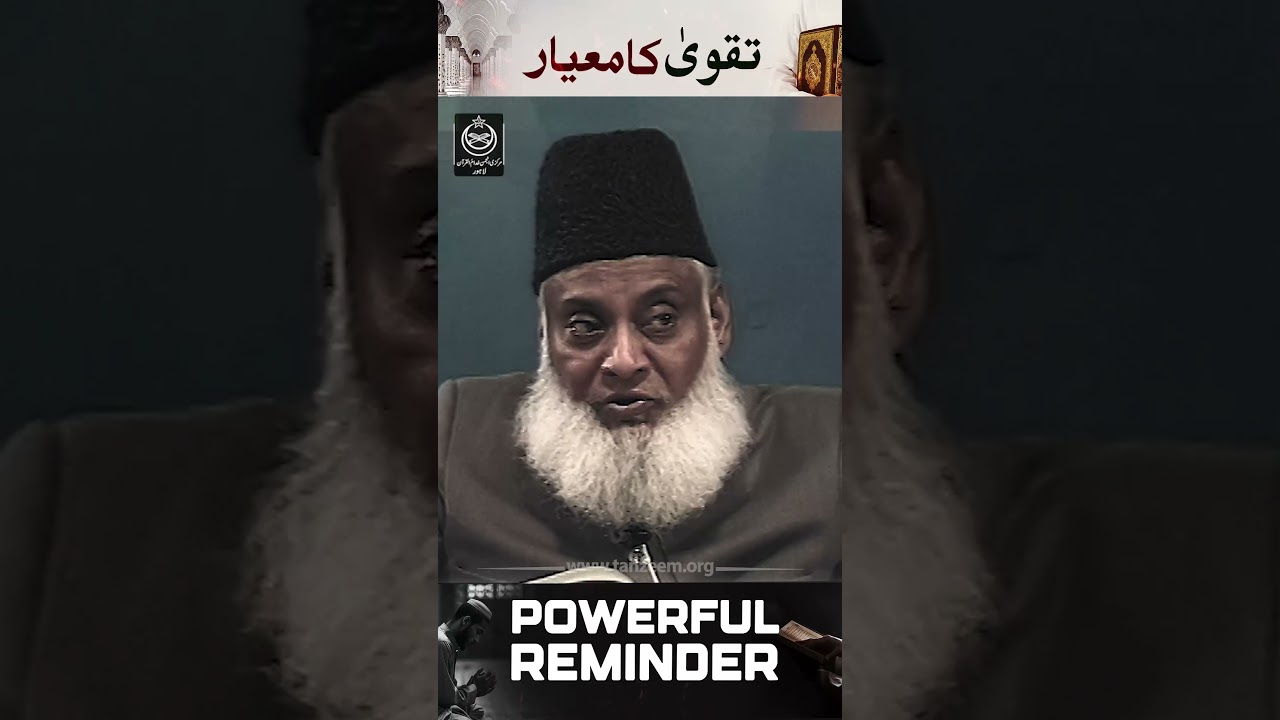
This lecture clarifies that true piety (taqwa) extends beyond mere ritualistic observance – prayers, fasting, avoiding forbidden foods. It emphasizes abstaining from unjustly acquiring wealth, avoiding deceptive practices, and not using wealth to influence authorities for personal gain. Genuine piety involves a commitment to ethical financial conduct and a sincere avoidance of all forms of injustice. It highlights that simply performing religious duties without inner sincerity and righteous conduct does not constitute true taqwa.
97
