Shorts
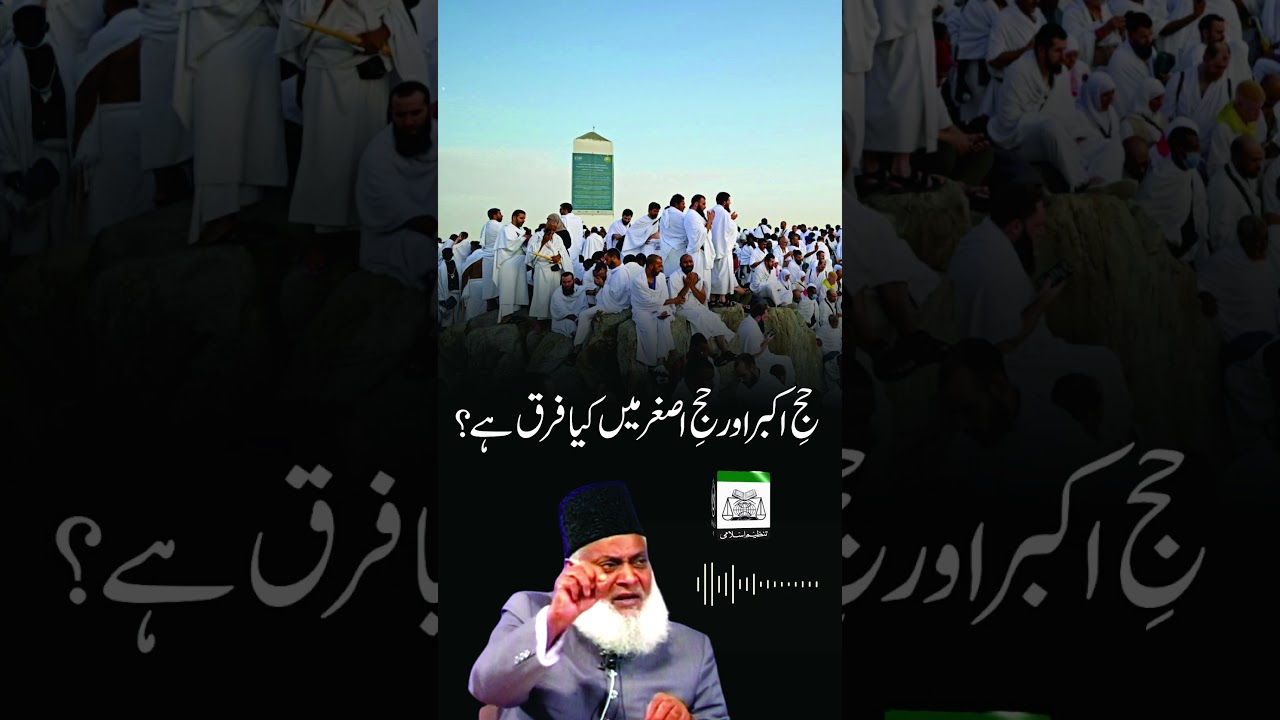
The common misconception that performing Hajj on a Friday is ‘Hajj Akbar’ is inaccurate. Originally, Arabs designated ‘Hajj Asghar’ for Umrah and ‘Hajj Akbar’ for the complete Hajj pilgrimage. The core meaning of ‘Hajj’ is intentional travel or journeying. Therefore, traveling for Umrah also constituted a ‘Hajj,’ albeit a lesser one. The Hajj performed during the designated days in Mecca is considered ‘Hajj Akbar.’ There is no additional merit to performing Hajj specifically on a Friday.

99
This lecture explores the profound and ineffable status of Prophet Muhammad (peace be upon him). Dr. Israr Ahmad cautions against attempting to fully comprehend or articulate this status, emphasizing its transcendence of human understanding. He draws a parallel to a rural man’s limited worldview, represented by his highest reference point being a local land administrator, to illustrate the human inability to grasp divine realities. The speaker highlights that any attempt to define the Prophet’s status risks diminishing it, and true reverence lies in acknowledging its sacredness and submitting to divine knowledge.
66
This lecture clarifies the permissibility of dedicating the reward of charitable deeds to others, specifically deceased parents or loved ones. It distinguishes between financial donations, where transferring the reward is acceptable, and acts of worship like prayer and Quran recitation, where the reward belongs solely to the worshipper. The speaker emphasizes that dedicating worship directly to anyone other than Allah constitutes shirk (associating partners with God) and renders the act impermissible. Financial charity’s reward can be transferred, but the reward for obligatory worship remains with the individual performing it.
98
علامہ اقبال نے برعظیم پاک و ہند میں ایک علیحدہ مسلم مملکت کے قیام کی تین بنیادی وجوہات بیان کی ہیں۔ اول، یہ متحدہ ہندوستان میں مسلمانوں اور ہندوؤں کے درمیان جاری کشمکش کا واحد حل تھا۔ دوم، اس مملکت کے ذریعے مسلمانوں کو اسلام کا حقیقی نظام، جو محمد عربی صلی اللہ علیہ وسلم نے قائم کیا تھا، بحال کرنے کا موقع ملے گا۔ یہ نظام خلافت راشدین پر مبنی ہے، جو ملوکیت کے دور میں فراموش ہو گیا تھا۔ سوم، اقبال نے کہا کہ پاکستان، بھارت کا سب سے بڑا محافظ ثابت ہوگا۔ انہوں نے کہا کہ یہ ملک شمال مغربی سرحد پر بھارت کی حفاظت کرے گا۔
37
The Quran is uniquely preserved compared to all other texts. The world’s scholars acknowledge this fact. Every letter and pronunciation within the various recorded recitations – Sab’a Qira’at and ‘Ashara Qira’at – is meticulously documented, detailing even the use of *zabar* or *zir* for each word. The official text was standardized by Hazrat Uthman (RA), a significant service to the Muslim community. This preservation extends to the precise documentation of variations in recitation, ensuring the integrity of the divine text.
54
This lecture clarifies the distinction between trials (imtihan) and consequences (sada). It explains that both may appear similar externally, but the heart discerns their origin. Trials befall those striving on the righteous path, serving as tests from God. Consequences, however, stem from one’s actions. The heart will reveal whether a difficulty is a trial designed to elevate one’s status or a consequence requiring atonement. Recognizing this difference is crucial for spiritual growth and understanding divine justice.
55
