Shorts
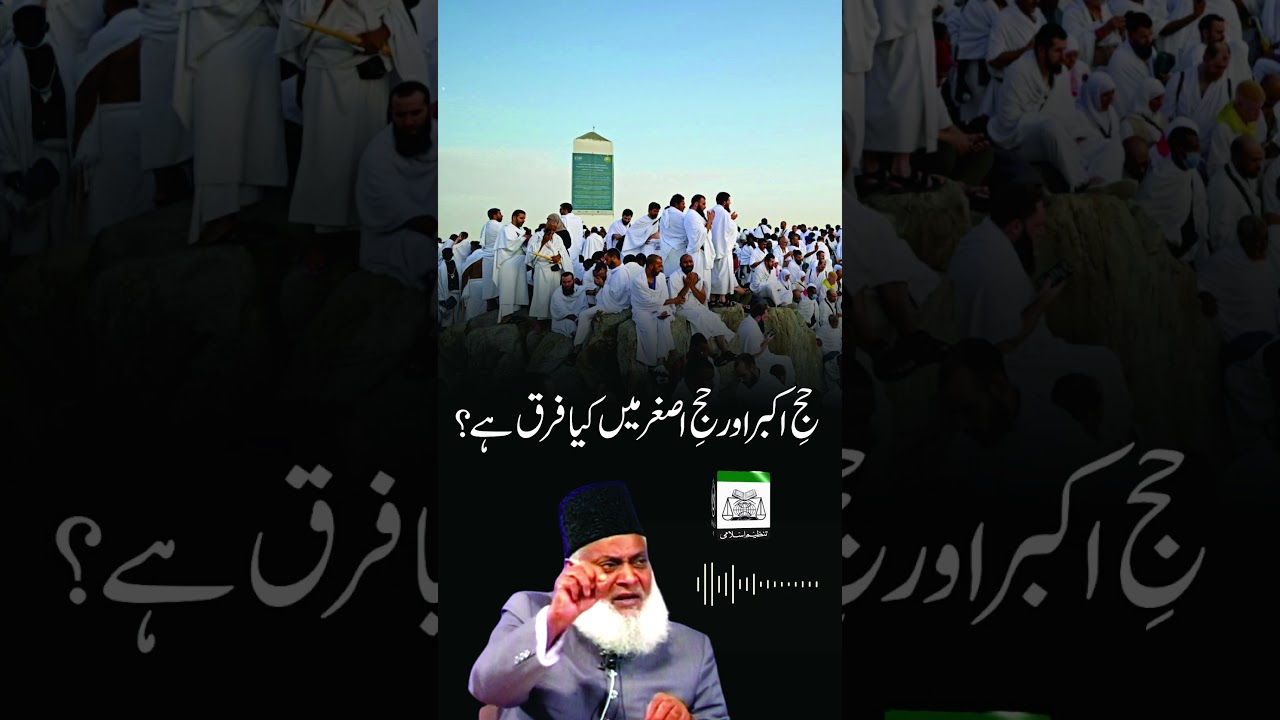
The common misconception that performing Hajj on a Friday is ‘Hajj Akbar’ is inaccurate. Originally, Arabs designated ‘Hajj Asghar’ for Umrah and ‘Hajj Akbar’ for the complete Hajj pilgrimage. The core meaning of ‘Hajj’ is intentional travel or journeying. Therefore, traveling for Umrah also constituted a ‘Hajj,’ albeit a lesser one. The Hajj performed during the designated days in Mecca is considered ‘Hajj Akbar.’ There is no additional merit to performing Hajj specifically on a Friday.

99

This lecture details the five rights the Quran has over every Muslim: belief, recitation with proper Tajweed, understanding, implementation in individual and collective life, and propagation. It emphasizes that fulfilling these rights is a collective responsibility requiring a societal system for enacting Islamic law. Failure to uphold these rights is likened to burdening a donkey with books, signifying a failure to bear the responsibility of divine guidance. The discussion highlights the importance of correct pronunciation, deep understanding (not just memorization), practical application of teachings in both personal and communal spheres, and the dissemination of knowledge to others. It stresses that collective duties, such as enforcing Sharia law (e.g., penalties for theft or adultery, prohibition of interest), necessitate an established system, not individual actions.
54

The soul is distinct from the body. While death seizes the body, returning it to the earth from whence it came, the soul does not experience death itself. It is a transfer, originating from God and returning to Him. The soul temporarily inhabits the body during earthly life, then either resides in 'Aliyeen' or 'Sijjeen' – realms of varying states – awaiting eventual return to its divine source. The body is subject to earthly cycles of creation and dissolution, but the soul is eternal and its destiny lies with God.
44

This excerpt emphasizes the Quran as both guidance and mercy specifically for those who believe. It reiterates that divine favor and mercy are the ultimate blessings, surpassing worldly possessions. The verses from Surah Yunus (10) highlight that true joy lies in recognizing and accepting these gifts from God. The Quranic message is not merely instruction but a source of compassion and solace for the faithful.
89

This reflection acknowledges the inevitability of setbacks and failures in life's endeavors. It encourages proactive preparation for hardship, framing success as a bonus rather than an expectation. The core message emphasizes continuous effort and resilience, even in the face of repeated disappointments. It advocates for persistent work, nurturing hope, and seeking divine assistance, recognizing that struggle is a constant companion to growth and progress. The text urges acceptance of life's cycles, suggesting that after every loss, preparation for the next beginning is essential.
48

This lecture emphasizes the comprehensive responsibility of individuals, particularly heads of households, not only to provide for their families' material needs but also to ensure their spiritual well-being and protect them from the consequences of wrongdoing. It highlights that each person will be held accountable for the guidance and upbringing of those under their care – spouses, children, and other dependents. The speaker stresses that safeguarding one's family from the fires of hell is a positive and essential duty, drawing parallels to a shepherd being accountable for their flock.
84
