Quần short
Iqbal critically analyzed modern ideologies, identifying inherent dangers within them. He particularly opposed nationalism (wataniyat) as a political concept, viewing it as a new form of idolatry that overshadows faith. He contrasted the spiritual unity of Islam with the divisive nature of national identities. Iqbal saw secularism and nationalism as major threats—forms of shirk (polytheism) and kufr (disbelief)—and materialism as the defining characteristic of contemporary civilization. He argued that true strength lies in adhering to the principles of Tawhid (Oneness of God) and embracing Islam as a complete way of life.

72
This discourse details the path of *Sirat-e-Mustaqeem* (the straight path) as it transitions from this world into the intermediate realm (Barzakh) and ultimately becomes the bridge over Hell on the Day of Judgement. It explains how the righteous will traverse this path to enter Paradise, witnessing the salvation granted by God, while the wrongdoers will fall from it due to their lack of divine guidance. The lecture emphasizes the immense value of God’s mercy and forgiveness for those who adopted a path of piety in this world. Those devoted to *taqwa* (piety) will be rescued, while the unjust will remain fallen. This path will be a test of faith and a demonstration of God’s justice.
48
Iqbal critically analyzes modern ideologies, identifying secularism and nationalism as significant threats—forms of idolatry—to Islamic faith and societal values. He posits that prioritizing the nation-state over faith creates a new form of worship, eclipsing the divine. Iqbal warns that materialism, prevalent in contemporary civilization, further exacerbates this spiritual crisis. He emphasizes the strength of Islam and calls for a return to its principles, urging Muslims to resist these destructive ideologies and uphold their faith. He views the current age as marked by intense emotional fervor and the corruption of religious values.
60
This lecture explores the concept of *noor* (light) as inherent within the human heart and soul, predating the revelation of the Quran. The Quranic light, upon its descent, awakens and activates this pre-existing inner illumination. This process is exemplified in the Prophet Muhammad’s life, where the Quran served as a catalyst for his inherent spiritual capacity. The Quran is presented as a divine guide, empowering the Prophet to lead humanity towards righteousness. The lecture emphasizes the transformative power of the Quran in illuminating the inner self and guiding others towards the straight path.
58
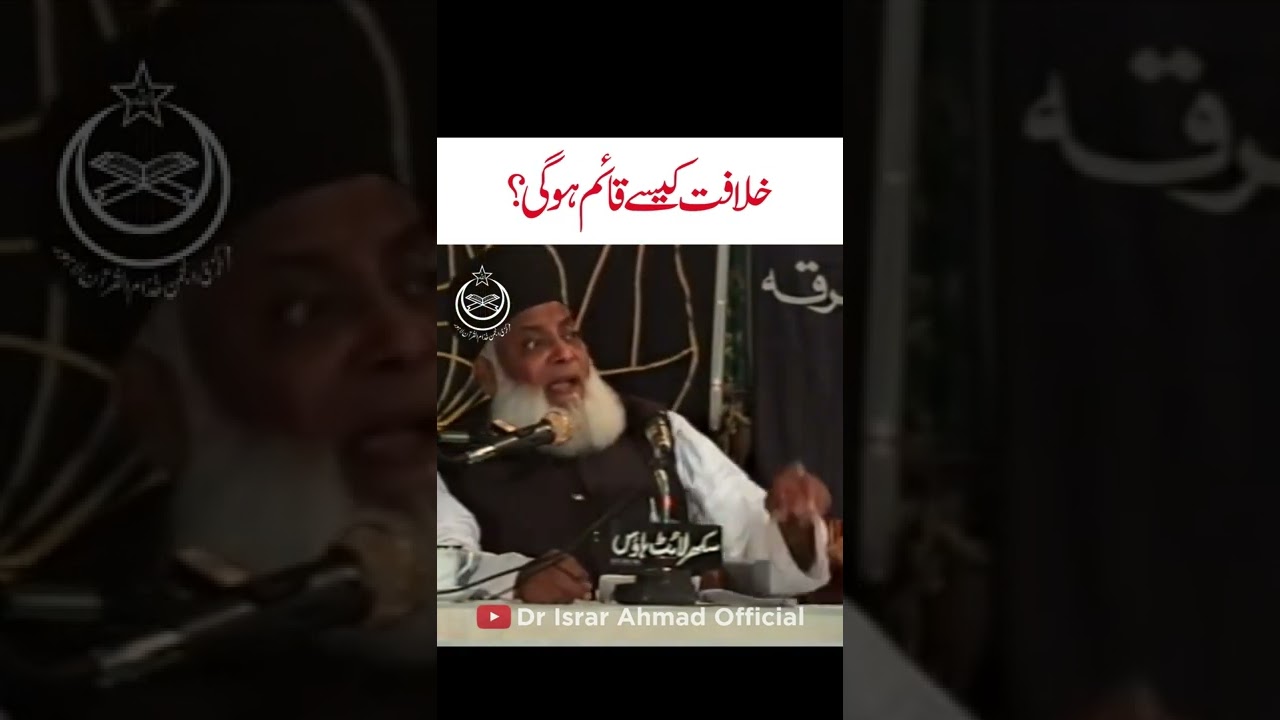
Dr. Israr Ahmad discusses the future establishment of a global caliphate rooted in the prophetic tradition. He references prophecies indicating a time when the message of Islam will permeate every corner of the earth, reaching all of humanity. He describes a vision where no home or dwelling will remain untouched by the teachings of Islam, and that his community will govern the entirety of the earth, having witnessed its eastern and western reaches in a divine revelation.
89
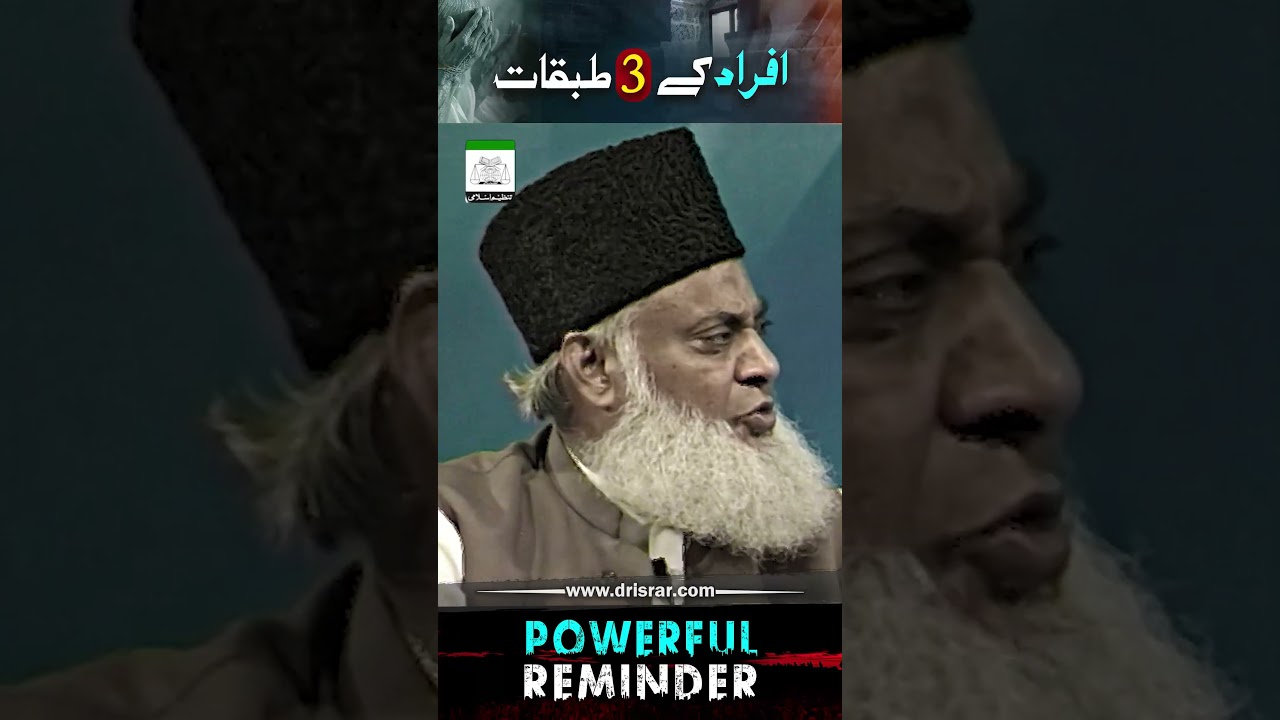
This lecture categorizes people into three groups based on their relationship with faith and worldly desires. The first group possesses genuine faith, pure intentions, and benefits from divine guidance. The second group is consumed by materialism, devoid of true spirituality or meaningful good deeds, and spends wealth solely on personal indulgence. The third group occupies an intermediate position, performing good deeds motivated by ego, reputation, or worldly gain rather than sincere faith. Their actions are likened to a mirage, lacking genuine spiritual value. The lecture emphasizes the distinction between actions performed for the sake of Allah and those driven by self-interest.
59
