السراويل القصيرة

This lecture explores the concept of unwavering faith and dedication to God’s path, drawing a parallel to a solid, impenetrable wall. Dr. Israr Ahmad explains that true believers stand firm in their commitment, united and resolute, much like a wall reinforced with concrete. He references Iqbal's poetry to illustrate the courage and strength of those who fight for their faith, highlighting that God loves those who strive in His cause, standing together as an unbreakable force. The lecture emphasizes that this steadfastness is the key to attaining divine favor and recognition.

65

The Quran’s compilation involved both a chronological (نزولی) and the current (مصحف) arrangement. The earliest verses revealed were from Surah Al-Alaq, followed by Surah Al-Qalam, parts of Surah Al-Muzzammil, Surah Al-Mudaththir, and then Surah Al-Fatiha. The current arrangement begins with Surah Al-Fatiha, followed by Surah Al-Baqarah, revealed in Medina. The Prophet Muhammad (peace be upon him) guided the scribes in arranging the verses as they were revealed, ensuring the final compilation was also divinely guided. This process of arrangement and compilation was a divine act, directed by God through His Messenger.
84

This lecture emphasizes that the completion of divine law through the Prophet Muhammad (peace be upon him) necessitates adherence for personal growth and fulfillment. It clarifies that Islamic law is not a burden but a guide for navigating life’s challenges, using the analogy of road signs on a dangerous mountain path. These signs, like the tenets of Shariat, are preventative measures designed to ensure safety and lead individuals towards the purpose for which they were created by God. The speaker highlights that restrictions within Shariat are not arbitrary, but rather safeguards for one’s wellbeing and spiritual development.
60

A truly accepted pilgrimage, Hajj-e-Mabroor, is achieved through earnings from lawful sources and meticulous adherence to all its conditions, avoiding disputes and prioritizing the needs of fellow pilgrims. This selfless act fosters piety and guarantees a reward from Allah. Such a pilgrimage cleanses one of past sins, akin to a newborn's purity. It emphasizes the importance of sincerity, lawful income, and selfless service during Hajj to attain divine acceptance and spiritual renewal.
68

This lecture emphasizes the importance of verifying hadith before accepting them as truth. It advises against outright rejection but encourages pausing for research to confirm authenticity. The speaker highlights the immense effort undertaken by scholars in hadith compilation and stresses that dismissing hadith based on personal opinion is against established beliefs. The lecture advocates for careful consideration, investigation, and confirmation that a hadith is sound and conforms to established principles before acceptance. It cautions against hasty judgments and encourages a scholarly approach to understanding religious narrations.
71
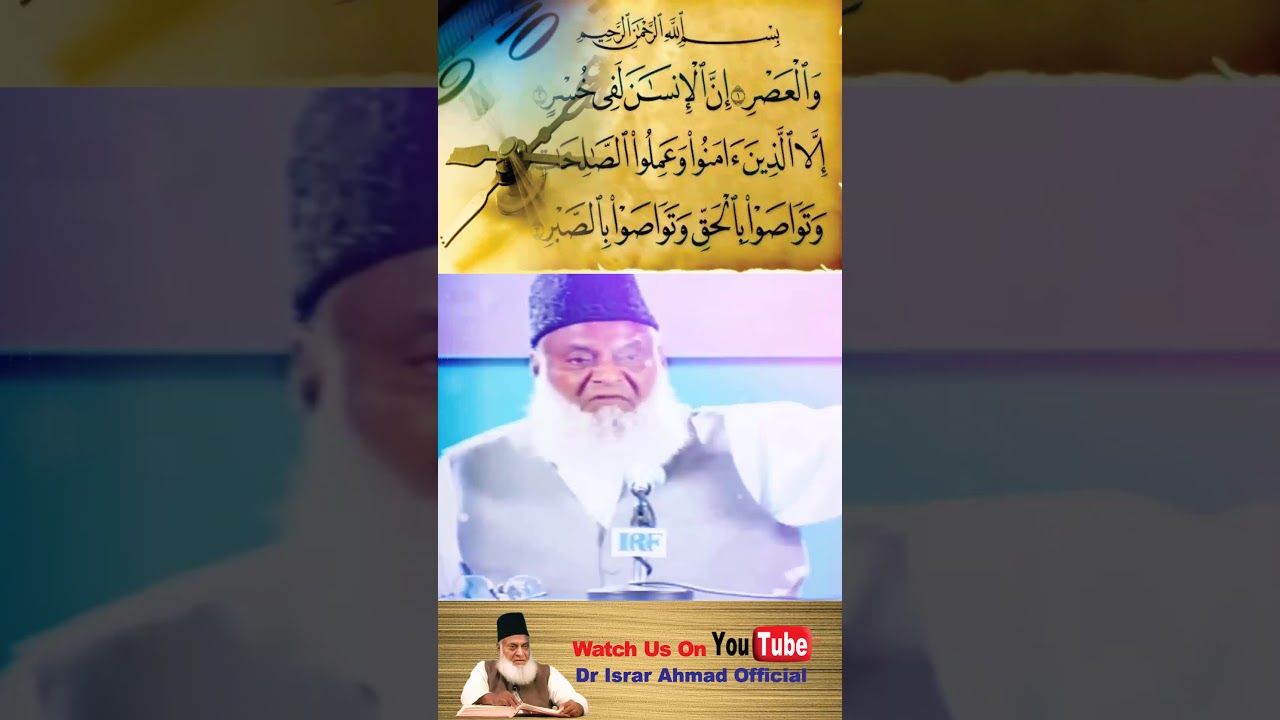
Humanity, universally, is in loss. Salvation is achieved through four essential conditions: faith, righteous deeds, advocating truth, and encouraging good conduct. These are not merely recommendations, but fundamental requirements for achieving deliverance. Without fulfilling these conditions, true salvation remains unattainable. This lecture details these prerequisites for spiritual success and a meaningful life.
220
