Celana pendek

Buying and selling shares in a company is permissible for a Muslim if the company conducts legitimate business. However, involvement with a company that manufactures alcohol is prohibited, making any shareholding or trade in it unlawful. Speculation within stock exchanges is also considered haram. Basic share trading itself is not forbidden, but additional complexities can render it impermissible.

111

This lecture explores the concept of unwavering faith and dedication to God’s path, drawing a parallel to a solid, impenetrable wall. Dr. Israr Ahmad explains that true believers stand firm in their commitment, united and resolute, much like a wall reinforced with concrete. He references Iqbal's poetry to illustrate the courage and strength of those who fight for their faith, highlighting that God loves those who strive in His cause, standing together as an unbreakable force. The lecture emphasizes that this steadfastness is the key to attaining divine favor and recognition.
69
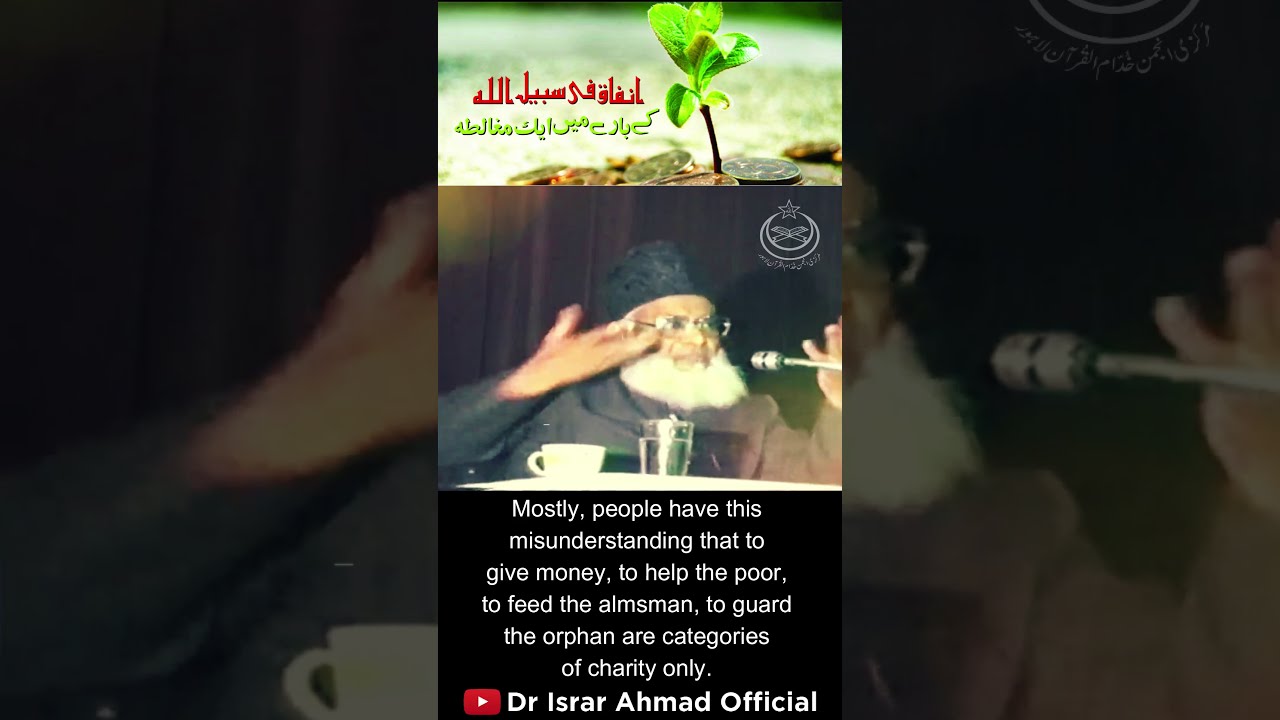
The term ‘Infaq’ in the Quran differs from general charity. It’s not limited to helping the poor, orphans, or the needy. Infaq specifically refers to spending in the way of Allah – for the propagation, elevation, and establishment of the religion. This spending, considered a loan to Allah, fuels the struggle for Islam's dominance. Supporting relatives is a personal obligation, while investing in the religion is a direct loan to Allah, a debt He Himself acknowledges. This concept distinguishes between familial support and investment in faith.
93

Everything in the heavens and the earth glorifies Allah. While praising Allah is essential – as even inanimate objects and plants do – humanity, granted stewardship of the earth and divine favor, is obligated to do more. True faith demands action: actively striving to establish divine guidance and elevate the word of God. Simply reciting praise is insufficient; believers must demonstrate their commitment through dedicated effort and sacrifice to make God’s will prevail. The core requirement of faith in God is not just glorification, but actively working to establish His dominion and uplift His message.
58

This lecture details three categories of people whose prayers are not accepted by God. These include a man who remains with a wife of bad character but refuses divorce, an individual who entrusts wealth to a foolish person despite divine prohibition, and a person who has a debt outstanding but did not establish proper witnesses. God will not answer the prayers of such individuals.
52

The most crucial element is religious knowledge. Despite an abundance of information and scholars today, a deficiency exists not in knowledge itself, but in conviction, faith, and—most importantly—deep understanding and application (fiqh). Mere accumulation of facts without insightful comprehension holds little value. The core issue isn’t a lack of information, but a lack of faith, certainty, and the ability to derive practical wisdom from knowledge.
69
