Pantalones cortos

Buying and selling shares in a company is permissible for a Muslim if the company conducts legitimate business. However, involvement with a company that manufactures alcohol is prohibited, making any shareholding or trade in it unlawful. Speculation within stock exchanges is also considered haram. Basic share trading itself is not forbidden, but additional complexities can render it impermissible.

111

Hazrat Ubada ibn Samit relate that they pledged allegiance to the Prophet Muhammad, peace be upon him, agreeing to listen and obey in times of ease and hardship, willingly and even under duress. They committed to prioritizing others over themselves, accepting the leadership of appointed authorities without dissent, and speaking the truth openly, regardless of criticism or consequences. This pledge encompassed a complete submission to divine guidance and a dedication to upholding justice and righteousness.
55

This lecture explores the Prophet Muhammad’s (peace be upon him) acknowledgement of uncertainty regarding the timing of divine victory. The Quranic verses cited reveal that even the Prophet did not know whether the promised events were imminent or distant. This highlights a crucial understanding: knowledge of the unseen rests solely with God. The lecture emphasizes that such knowledge is not granted to even the most revered messengers, and that uncertainty about the future is a natural human condition. The verses also suggest that trials and tribulations may be part of the divine plan, serving as both tests and opportunities for growth. The core message is acceptance of divine will and a focus on present action rather than speculation about the future.
45

True faith necessitates prioritizing devotion to God above all else, even familial bonds. This lecture explores the conditions for attaining genuine faith, emphasizing that complete obedience to God is a continuous struggle against internal desires and external temptations. Four fundamental acts of worship are presented as pillars supporting a life of sincerity and devotion. The lecture stresses the difficulty of this pursuit, acknowledging the influence of the self and the constant efforts needed to overcome worldly inclinations. Genuine worship demands a wholehearted commitment, transcending mere ritualistic observance.
64
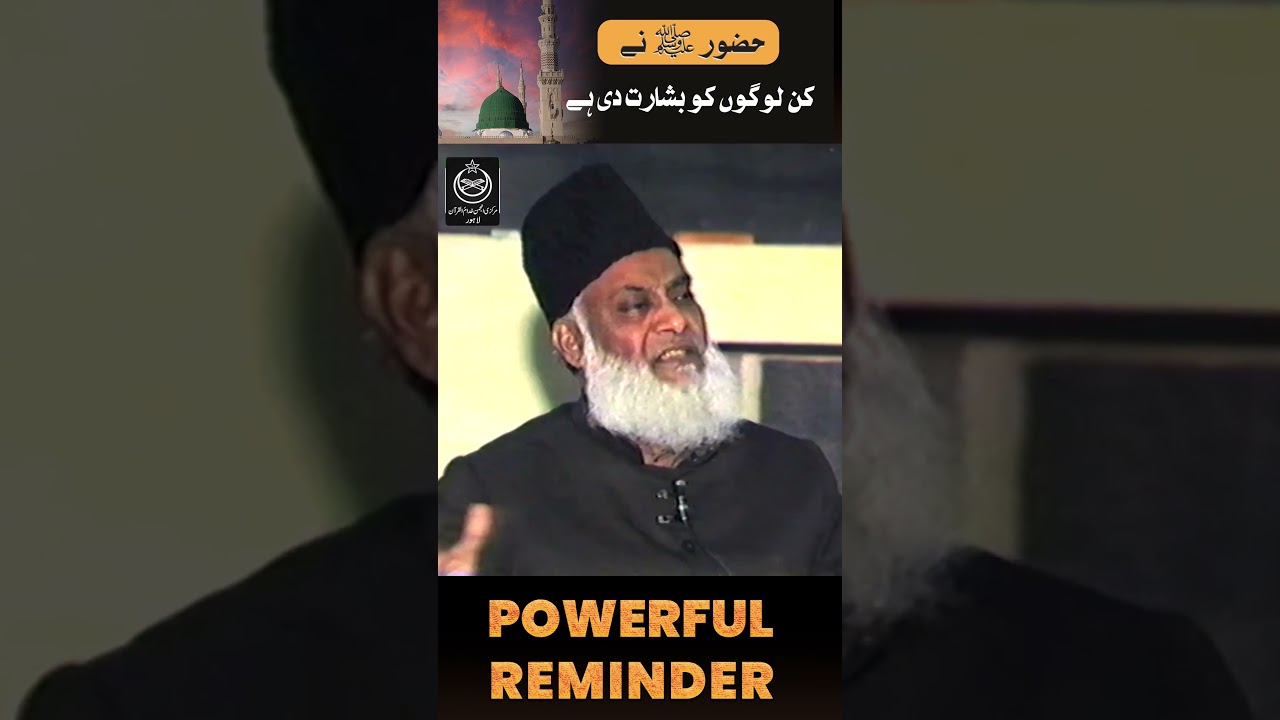
The lecture discusses the origins of Islam, emphasizing its initial state of being foreign and unfamiliar. It highlights how Allah granted Islam dominance and power, but warns of a potential return to its original state of isolation if individuals distance themselves from its principles. The speaker congratulates those who remain connected to Islam, despite facing potential alienation and lack of support from their surroundings. The message underscores the importance of remaining steadfast in faith to avoid becoming outcasts.
60

Dr. Israr Ahmad explains that the practice of *barat* (wedding processions) has no basis in Islamic scripture. He details its origins in pre-Islamic, specifically Hindu, customs. Historically, *barats* originated as armed escorts to transport the bride and her dowry safely between villages, protecting against bandits. These processions evolved into extravagant, multi-day celebrations involving feasting and displays of wealth. Dr. Ahmad asserts that this entire practice is foreign to Islamic teachings and represents a cultural import, not a religious obligation. The custom’s roots lie entirely outside Islam.
64
