Shorts

The word ‘Sawm’ (fasting) fundamentally means to abstain or stop. This encompasses ceasing from eating and drinking, halting speech, or even pausing physical activity. The Quranic verse from Surah Maryam references a vow of abstinence. Historically, ‘Sawm’ in pre-Islamic Arabian society denoted refraining from desires, including sexual activity. It also described a horse standing perfectly still. The term was adopted by the Quran to define the act of fasting as a form of worship, signifying a complete cessation of bodily needs and worldly distractions. It’s a comprehensive cessation, not merely from food and drink, but from all impulsive desires and worldly engagements.

75
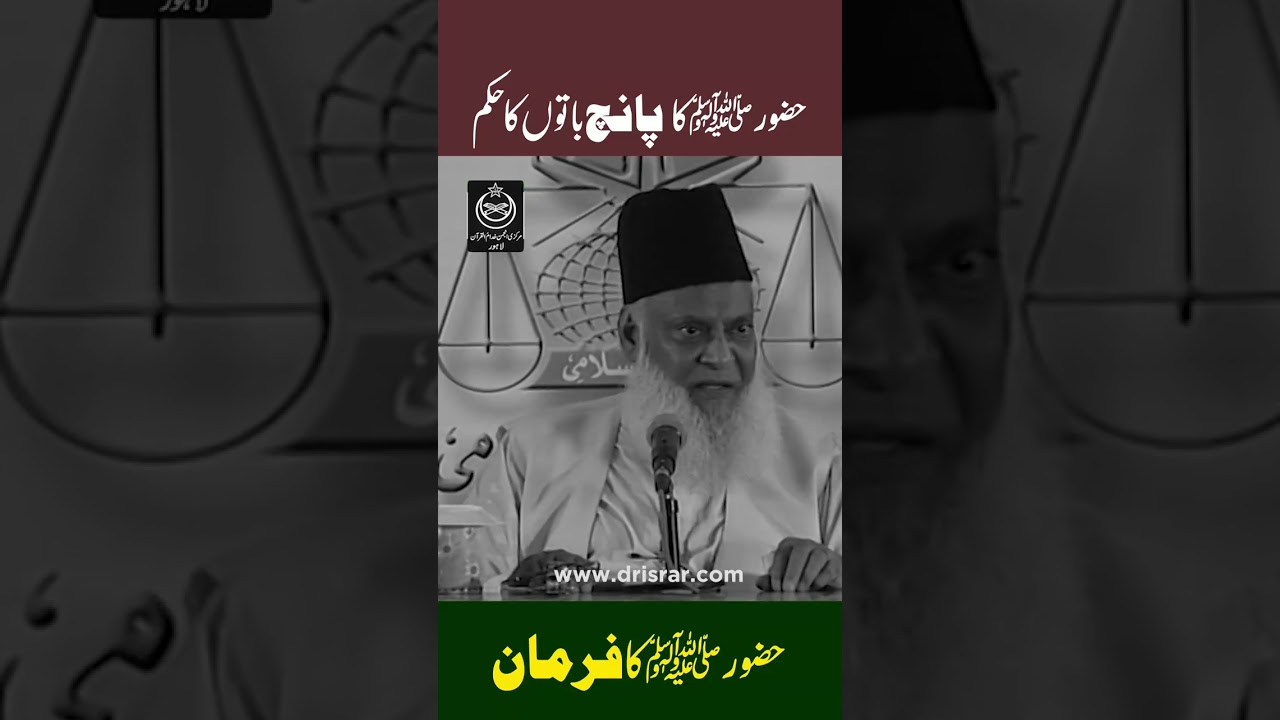
Hares Ahshari reports that the Messenger of Allah commanded Muslims to adhere to five principles: maintaining unity and cohesion within the community, obedience to leadership, migration for the sake of faith, and striving in the path of God. This directive, relayed by the Prophet, is not of his own volition but a direct command from God. These principles are essential for the strength and progress of the Muslim community, ensuring collective action and spiritual advancement. The report emphasizes that these are divine instructions, communicated through the Prophet, and should be followed diligently.
48

During the time of Lord Wellington, the British government offered Allama Iqbal a governorship in South Africa, with the condition that Begum Iqbal accompany him to all official events. Iqbal declined, stating that while he may be a flawed Muslim, he would not compromise his wife's modesty for a government position. This incident, documented by Maulana Maududi in *Batool* magazine (April 1978), highlights Iqbal’s commitment to Islamic values. He similarly refused to attend a foreign delegation where wives were expected to accompany their husbands, upholding his wife’s observance of *purdah* (veil).
82

God dispatched messengers with clear miracles and revealed scriptures, including the ‘Mizan’ (scale of justice), to establish justice among people. The purpose of prophets, messengers, and the revelation of books is fundamentally to guide humanity toward equitable conduct and a just society. This lecture explores the divine rationale behind these actions and their impact on human existence.
38

The Quran, as divine speech, reflects the complete personality of its speaker – Allah. The eloquence and depth of language reveal the speaker's knowledge, sophistication, and the heights of their thought. It is a complete representation of divine attributes, offering insight into Allah’s characteristics, wisdom, and the breadth of divine understanding. The very nature of speech embodies the speaker’s status, intellect, and the scope of their perception. Consequently, the Quran serves as a perfect manifestation of Allah’s complete personality and attributes.
78

Dr. Israr Ahmad explains the importance of performing the movements of prayer (Salat) correctly and with complete attention. He highlights that rushing through the postures – especially transitions between standing, bowing (Ruku), prostration (Sujud), and sitting – constitutes a deficiency in prayer. Complete upright posture after rising from each movement is crucial, ensuring a moment of stillness (Qawmah) before proceeding. This meticulous adherence to the rituals, coupled with appropriate supplications during the sitting position, constitutes a truly accepted prayer.
62
