Шорты

True piety (taqwa) isn't about outward appearances or rituals, but an internal state of consciousness and unwavering faith. It’s a complete immersion of one's personality in the principles of divine guidance. Genuine piety manifests as a consistent effort to please God and avoid disobedience, permeating the entire being with a distinct spiritual color. It resides in the heart and is intrinsically linked to faith. The Prophet Muhammad (peace be upon him) repeatedly pointed to his chest to emphasize that piety dwells within the heart, not in external displays.

37
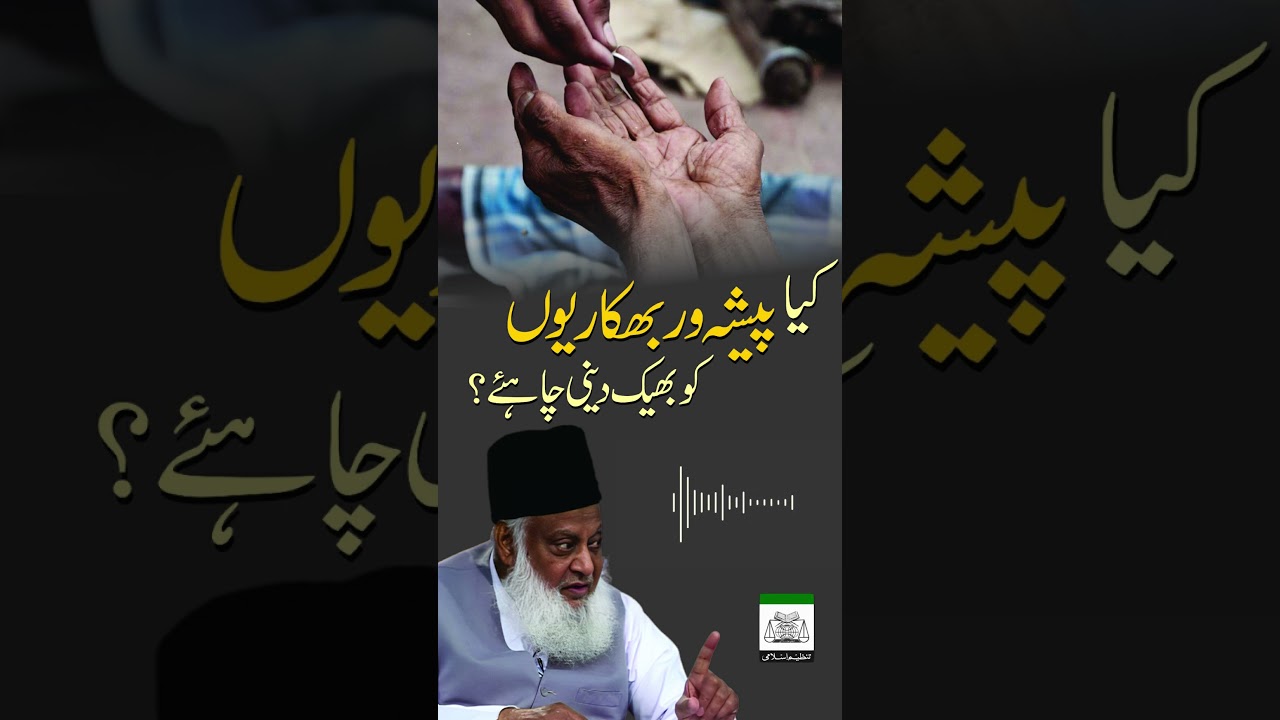
Dr. Israr Ahmad argues against giving money to professional beggars, stating it perpetuates a harmful system and discourages genuine charity. He emphasizes identifying and directly supporting those truly in need within one’s community, advocating for delivering aid to their homes rather than enabling begging. He asserts that supporting beggars inadvertently funds an institution of exploitation and makes those who do so complicit in a societal ill. True charity, he explains, involves identifying genuine need and providing direct assistance.
44

The Quraysh delegation arrived to Abu Talib during his final moments, issuing an ultimatum: control Muhammad or face open conflict. They didn’t seek wealth, power, or possessions, but demanded Muhammad cease his proclamation of One God. Abu Jahl immediately recognized the core issue – this message threatened the foundations of their entire belief system and the idols they worshipped. This bayān details the pivotal confrontation and the essence of the demand made against the Prophet Muhammad.
60

Human beings have a limited capacity for repentance and return to faith. As prejudice and obstinacy increase, individuals reach a point of no return, where their hearts are sealed by God. This sealing is not a sudden event but a gradual process resulting from consistent rejection, denial, and stubbornness. Once sealed, faith becomes impossible. This parallels the Quranic verse in Surah Baqarah, describing those who persistently reject guidance. The sealing affects their hearts, hearing, and vision, leaving them subject to divine punishment.
48

This discourse emphasizes that truthfulness stems from aligning statements with the principles of the Quran. Justice is achieved through Quranic rulings, and reward is assured for those who act upon its teachings. The Quran itself guides, and those who call others to it are guaranteed guidance. The speaker prays for divine assistance in remaining steadfast on the straight path for themselves and the audience.
85

This lecture clarifies the Islamic concepts of *israf* (wastefulness) and *tabzir* (extravagance). *Israf* is exceeding necessity when fulfilling a need, while *tabzir* is spending wealth unnecessarily for show and ostentation. The Quran condemns *tabzir* more severely than *israf*, equating those who practice it with the brothers of Satan. The speaker emphasizes the importance of moderation and fulfilling needs without excess, contrasting essential spending with wasteful displays of wealth. This discussion highlights the spiritual consequences of extravagance and promotes a mindful approach to resource utilization.
47
