Quần short
This lecture explains the concept of *tasbeeh* – the glorification of God – as inherent in the very fabric of creation. It clarifies that *tasbeeh* isn't limited to verbal recitation but encompasses the perfect and sustained existence of all things, free from imperfection or need. The lecture draws parallels between the act of floating or orbiting – maintaining a fixed course – and the continuous glorification of God by the universe. Every element, from planets to particles, testifies to the Creator’s perfection and power. The universe operates flawlessly, demonstrating divine knowledge, wisdom, and omnipotence. True *tasbeeh* is the silent testimony of creation to its perfect Creator, a being free from all flaws, weakness, and dependence.

58
This lecture clarifies the distinction between *Nabuwat* (prophethood) and *Risalat* (messengership). It explains that all *Rusul* (messengers) are *Nabi* (prophets), but not all *Anbiya* (prophets) are *Rusul* (messengers). The analogy of a CSP officer’s career progression—qualifying through an exam, undergoing training, and then receiving specific assignments—illustrates the concept. Prophethood represents the foundational qualification, while messengership signifies a specific appointment to deliver a divine message. This appointment transforms the individual into a *Rasul*, tasked with conveying a warning or message to their people. The lecture emphasizes that this appointment defines the messenger’s role.
111
This lecture elucidates the profound depth of Ghalib’s poetry, asserting it transcends mere artistic expression to become a vessel of divine communication. The speaker argues that each word chosen by Ghalib is deliberate and laden with meaning, functioning as a key to unlocking a treasury of wisdom. He draws parallels between Ghalib's verses and the Quran, emphasizing the significance of every letter and its connection to knowledge, philosophy, and spiritual insight. Ghalib’s poetry is presented not as exaggeration, but as a carefully constructed system of symbolic representation, revealing layers of hidden truths and divine guidance.
64
This lecture emphasizes the immense importance of serving and respecting one’s parents, particularly in their old age. It states that caring for elderly parents is a guaranteed path to Paradise. Neglecting them in their weakness is considered a grave misfortune. The talk highlights that showing kindness, affection, and providing for parents in their old age secures one’s entry into Jannah. It underscores the vital connection between parental respect and spiritual reward.
61
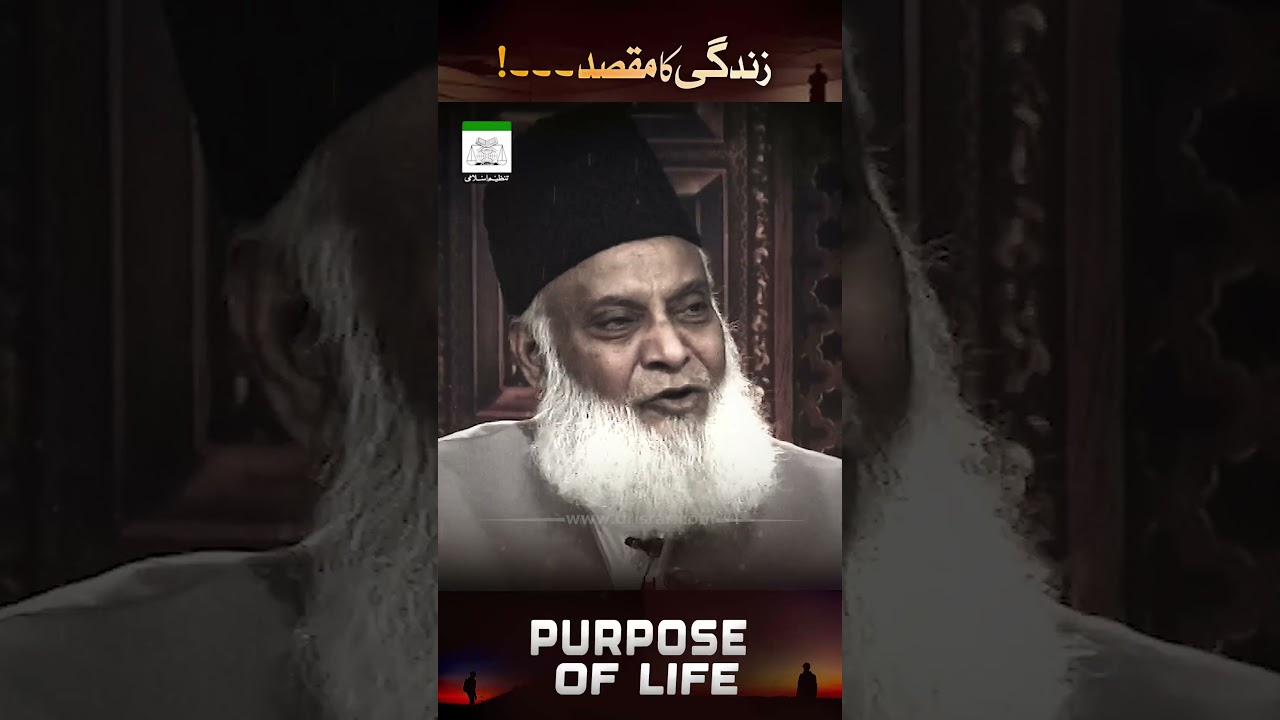
Every conscious human being has a purpose, an ideal, or an inspiration in life. They strive to achieve this ideal through effort and perseverance. A person without purpose is akin to an animal, living solely on instinct and fulfilling basic needs like eating and reproduction. Animals exist based on instinct, lacking a higher purpose. Such a life is considered base. The Quran emphasizes that a life devoid of purpose is animalistic. True humanity lies in having a defined goal and striving towards it.
97

Taghut refers to anything that transgresses the boundaries of worship and obedience to God. It originates from ‘tagha’, meaning to exceed limits. When something, be it an individual, institution, or state, oversteps the bounds of devotion intended solely for God, it becomes Taghut. This lecture defines Taghut as any entity that demands allegiance and submission outside of God’s commands. It emphasizes that the essence of worship is submission within defined limits, and exceeding these limits constitutes an act of Taghut. The concept extends beyond individuals to encompass systems and ideologies that usurp divine authority and demand absolute obedience, leading to a deviation from true worship.
52
